





How to reduce condensation in your veranda or glass room
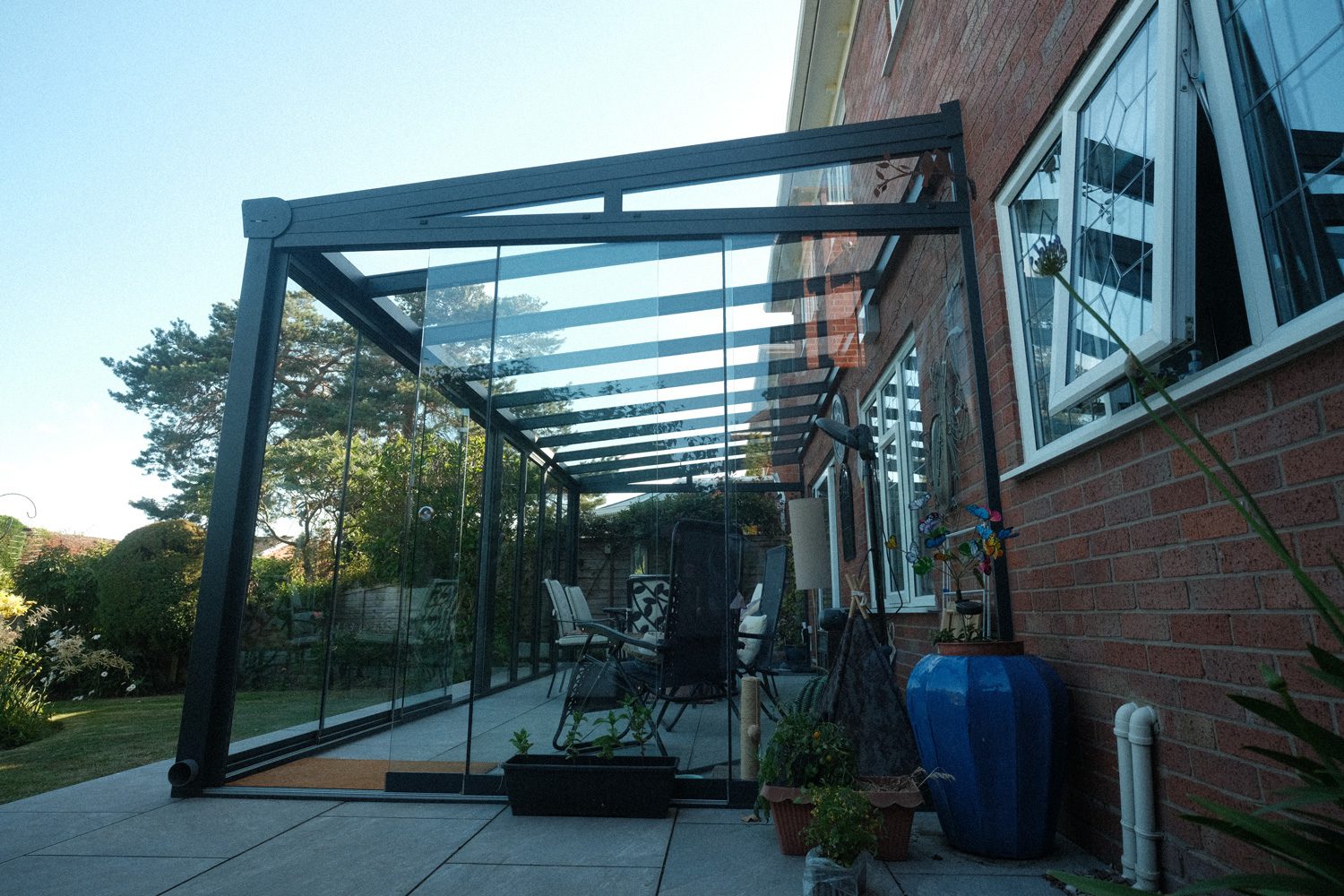
Condensation is one of the most common questions we receive from homeowners, especially during the colder months. While it’s a perfectly natural occurrence in the UK climate, it can become an annoyance if it starts affecting visibility, comfort or the overall look of your veranda or glass room. With the right design choices and a few simple habits, condensation can be managed very effectively, helping your outdoor living space remain bright, comfortable and inviting throughout the year.
At Fleming Verandas, every structure we design considers airflow, temperature and material performance from the outset. Whether you have a glass veranda, a fully enclosed garden room or a polycarbonate canopy, understanding how condensation forms — and how to reduce it — can dramatically improve how your space performs day to day.
Why condensation happens in verandas
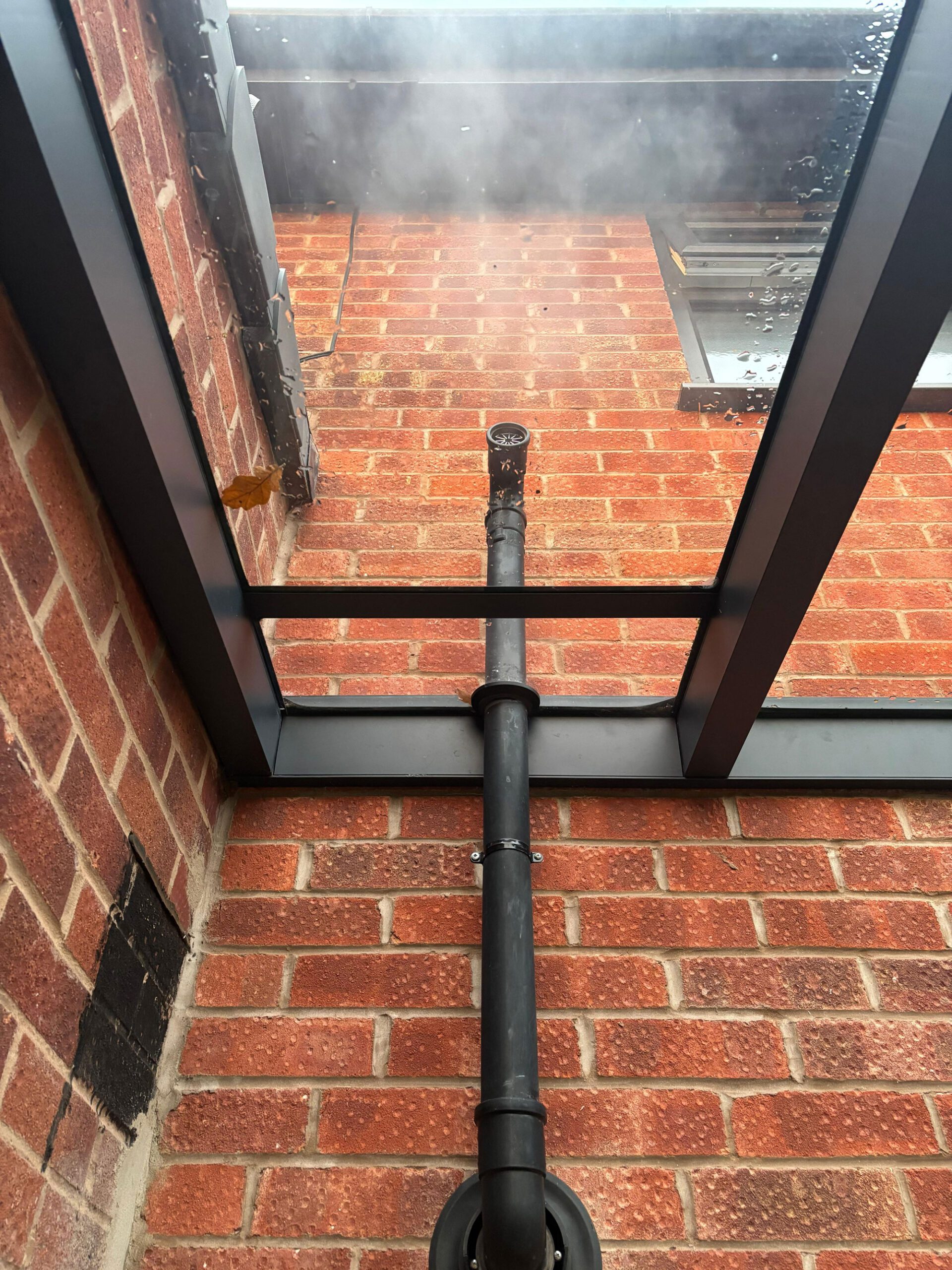
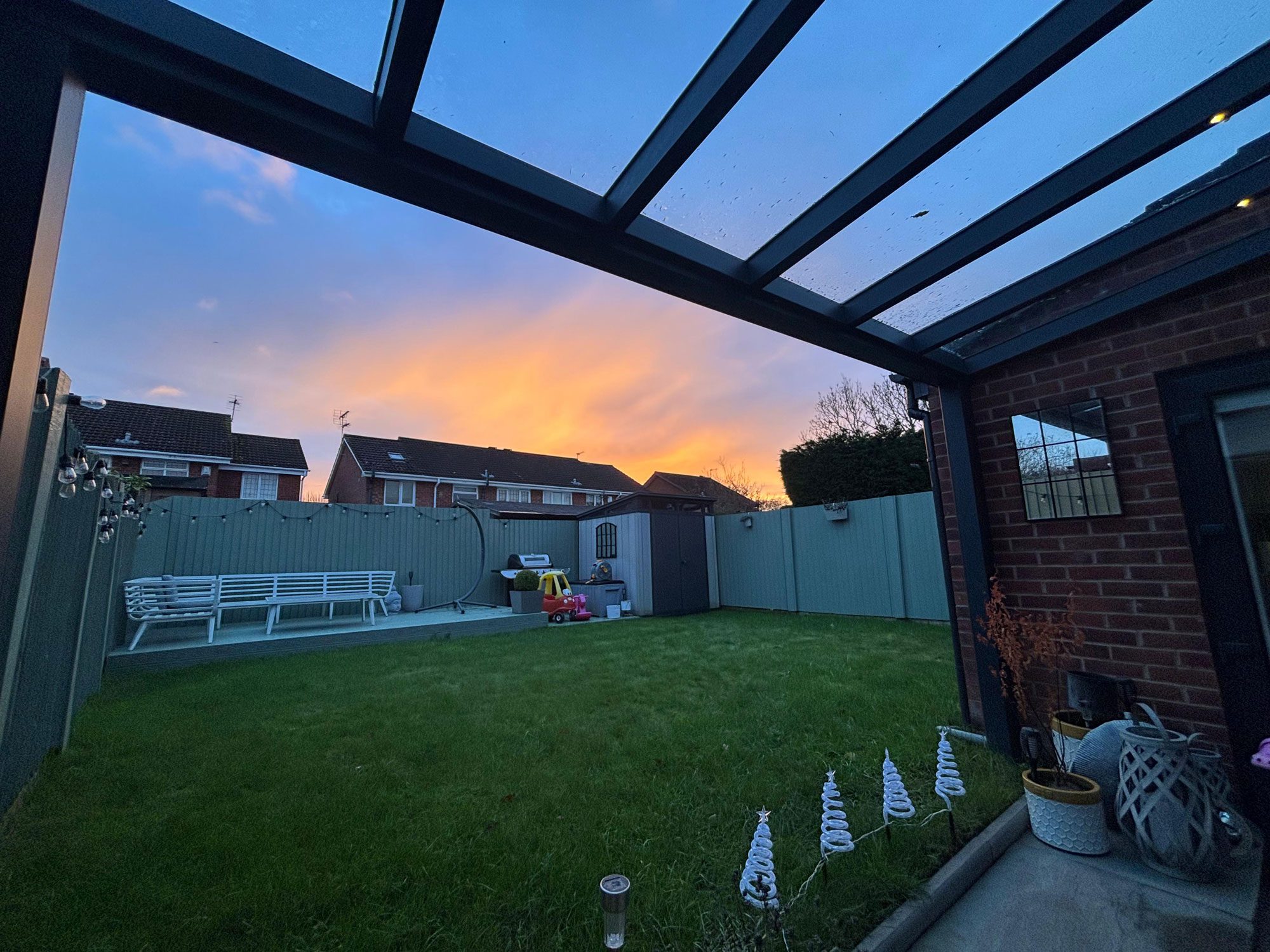
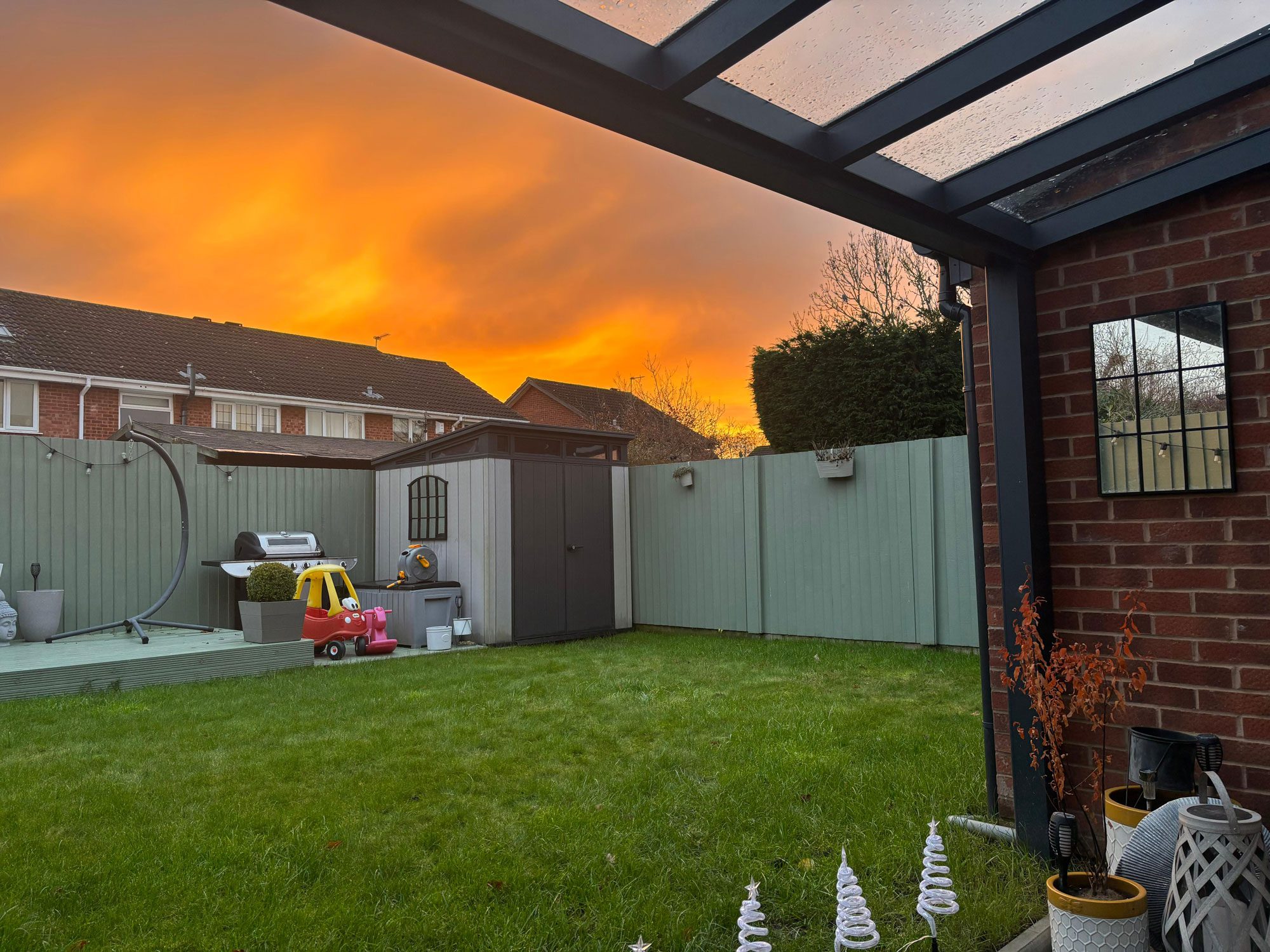
Condensation forms when warm, moist air meets a cooler surface and releases water droplets. Glass panels and roofs naturally cool down faster than the surrounding air, particularly overnight. As morning temperatures rise or humidity increases, the moisture suspended in the air begins to settle on these cooler surfaces, creating mist, droplets or light pooling.
This effect is most noticeable in enclosed glass rooms where airflow is more limited, but it can also appear on verandas positioned close to kitchens, patio doors or garden plants where there is more moisture in the air. Even the highest-quality glazing systems will show some condensation during sudden temperature changes. The aim is not to eliminate condensation entirely, but to manage it effectively.
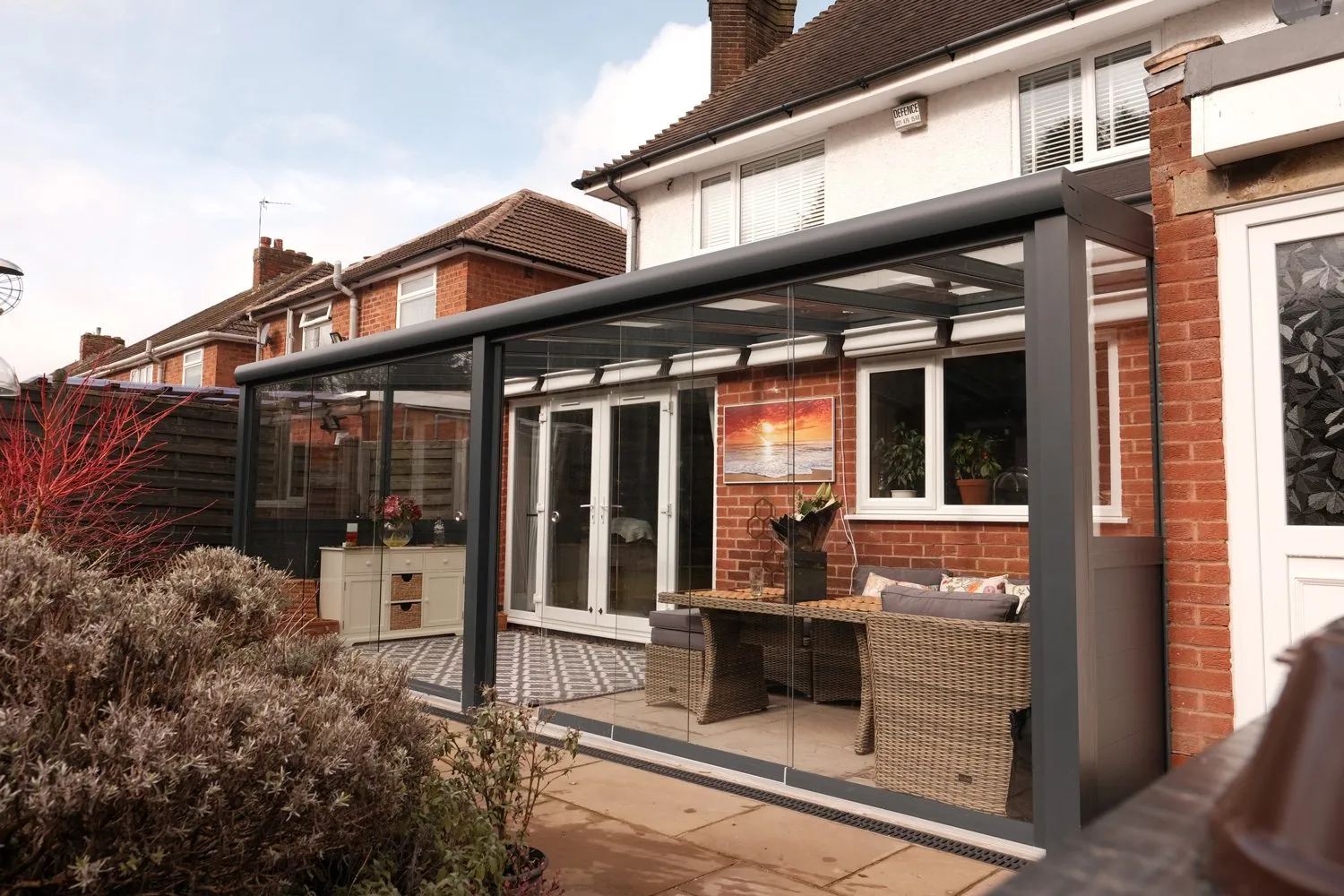
Ventilation: the most effective way to reduce condensation
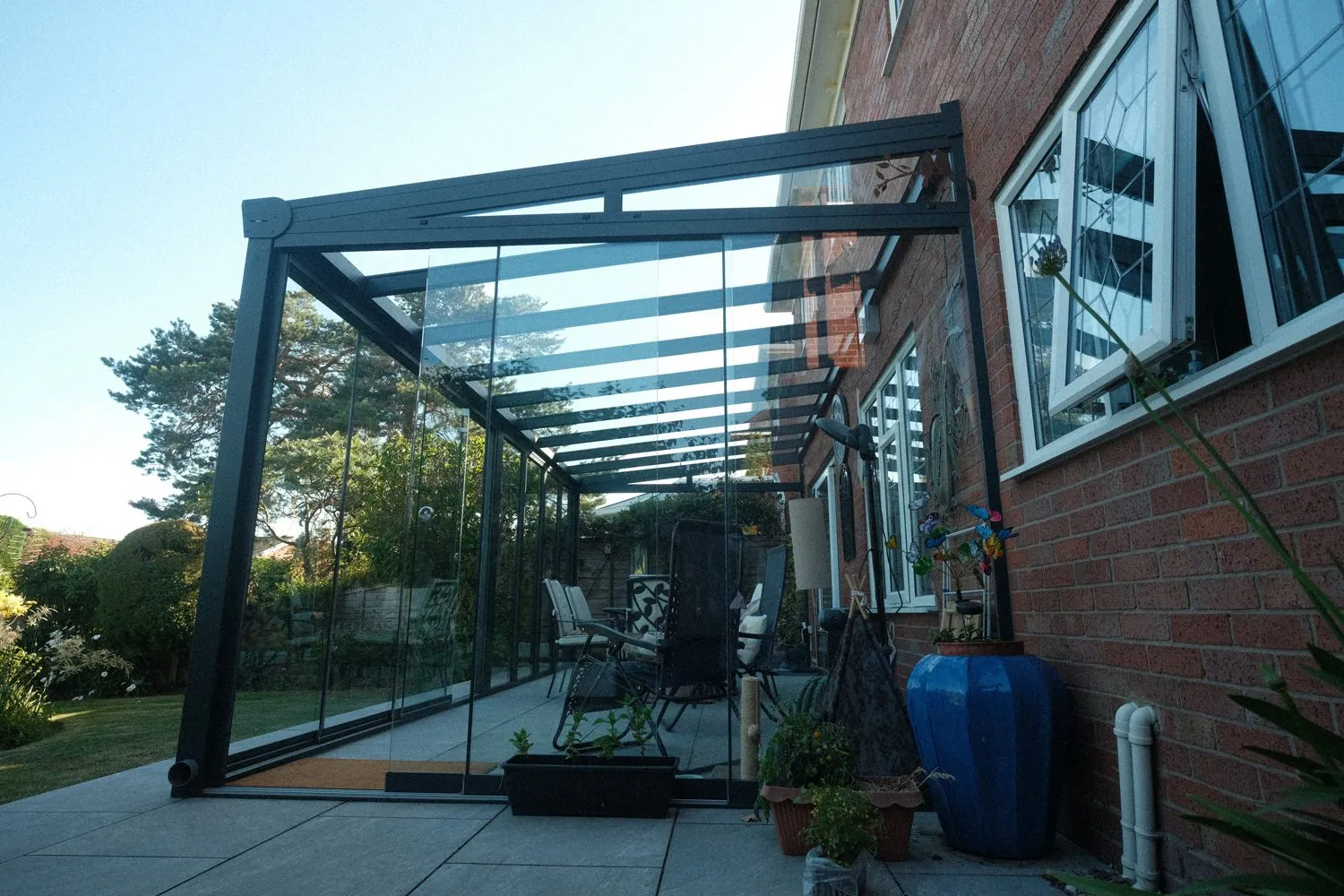
A veranda or glass room with good ventilation is far less likely to experience condensation problems. Fresh air allows moisture to escape, preventing it from settling on cooler surfaces. Even opening a single panel, sliding door or roof vent each day helps stabilise the environment beneath the canopy.
Glass rooms in particular benefit from regular airflow. Tilt-and-turn windows, sliding glass panels or partially opened doors let warm, moisture-rich air escape, reducing condensation build-up overnight. Lean-to verandas also gain natural airflow from their open sides, and leaving small gaps around furniture encourages circulation behind glass surfaces.
A well-ventilated veranda behaves more like an outdoor room, not a sealed conservatory — helping it stay clear, bright and usable across the seasons.
Heating and temperature regulation
Condensation becomes most visible when there is a sudden difference between the outdoor and indoor temperatures. Gentle, consistent heating helps stabilise the temperature of the air and glazing, reducing the dramatic shifts that cause moisture to form.
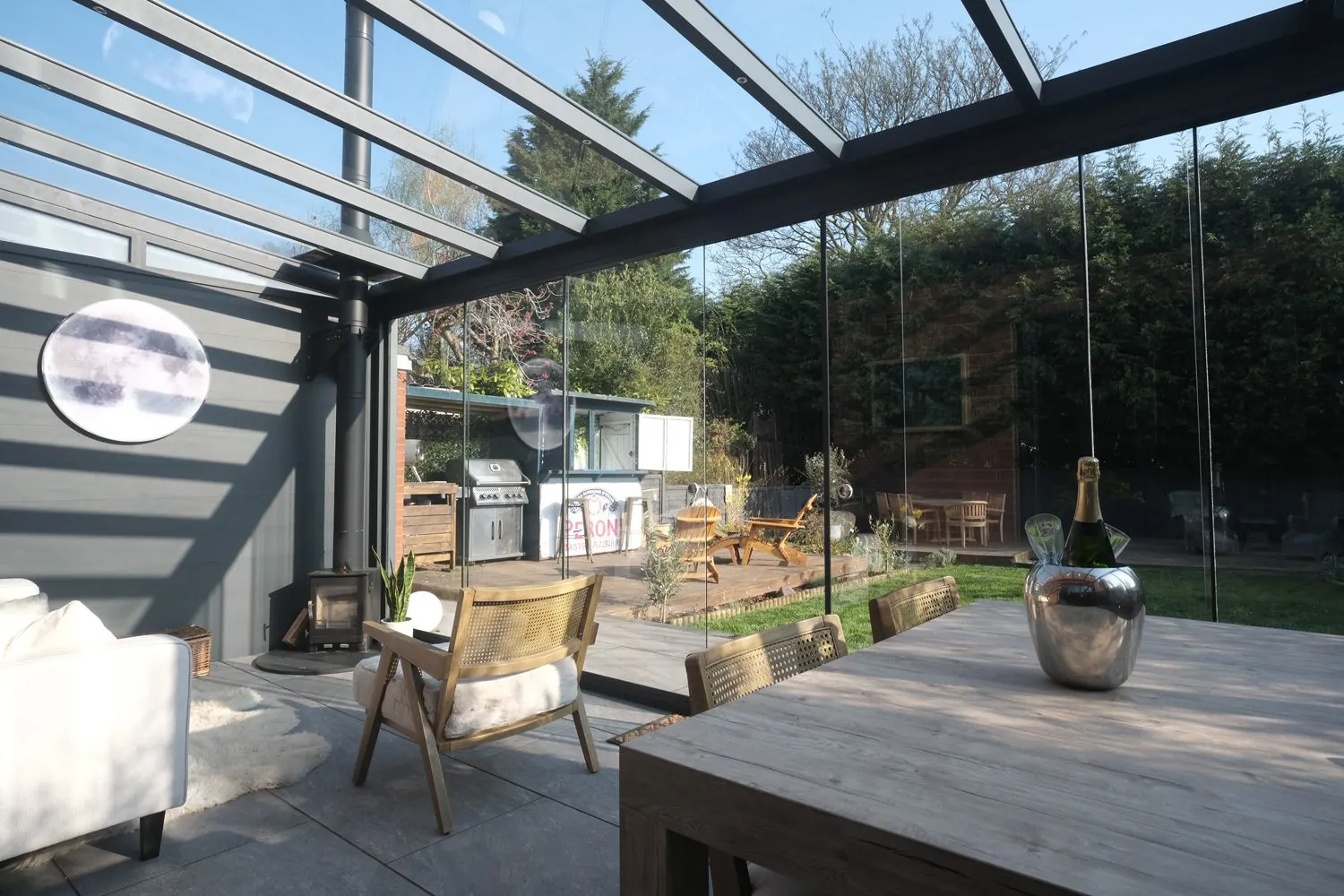
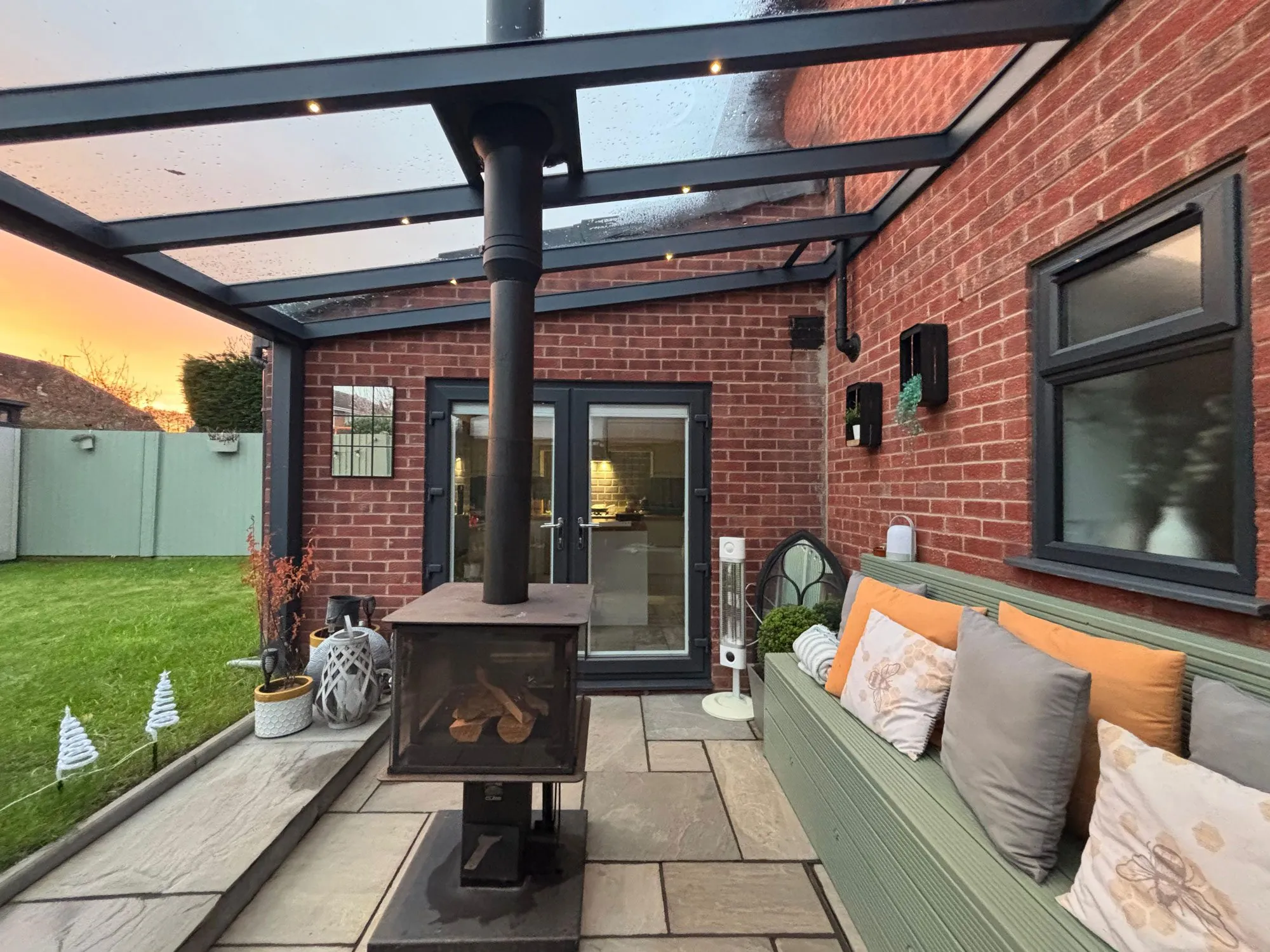
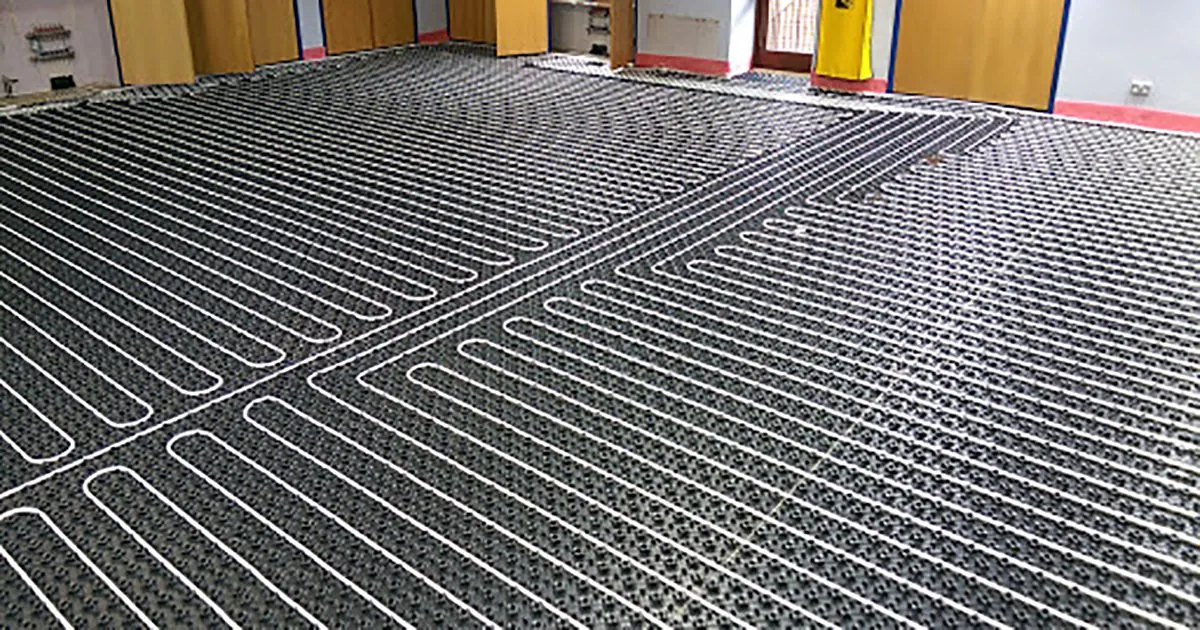
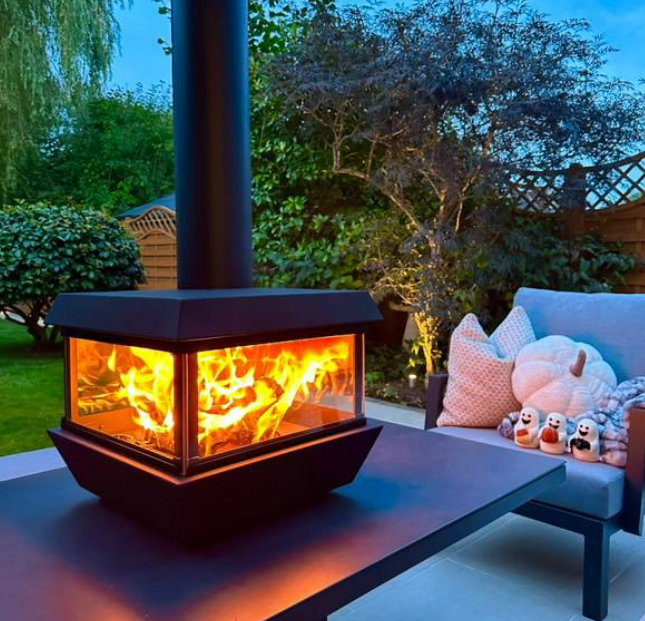
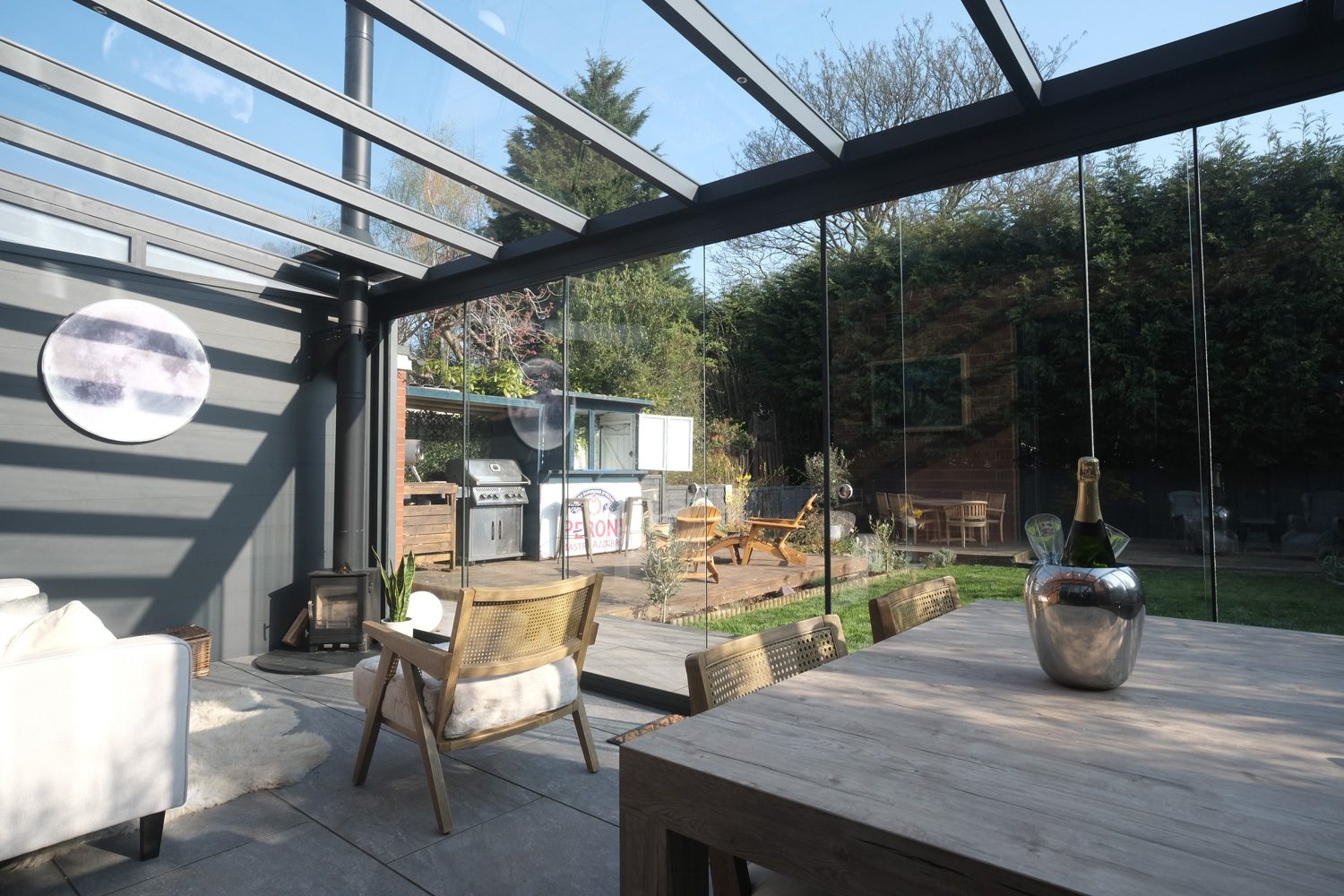
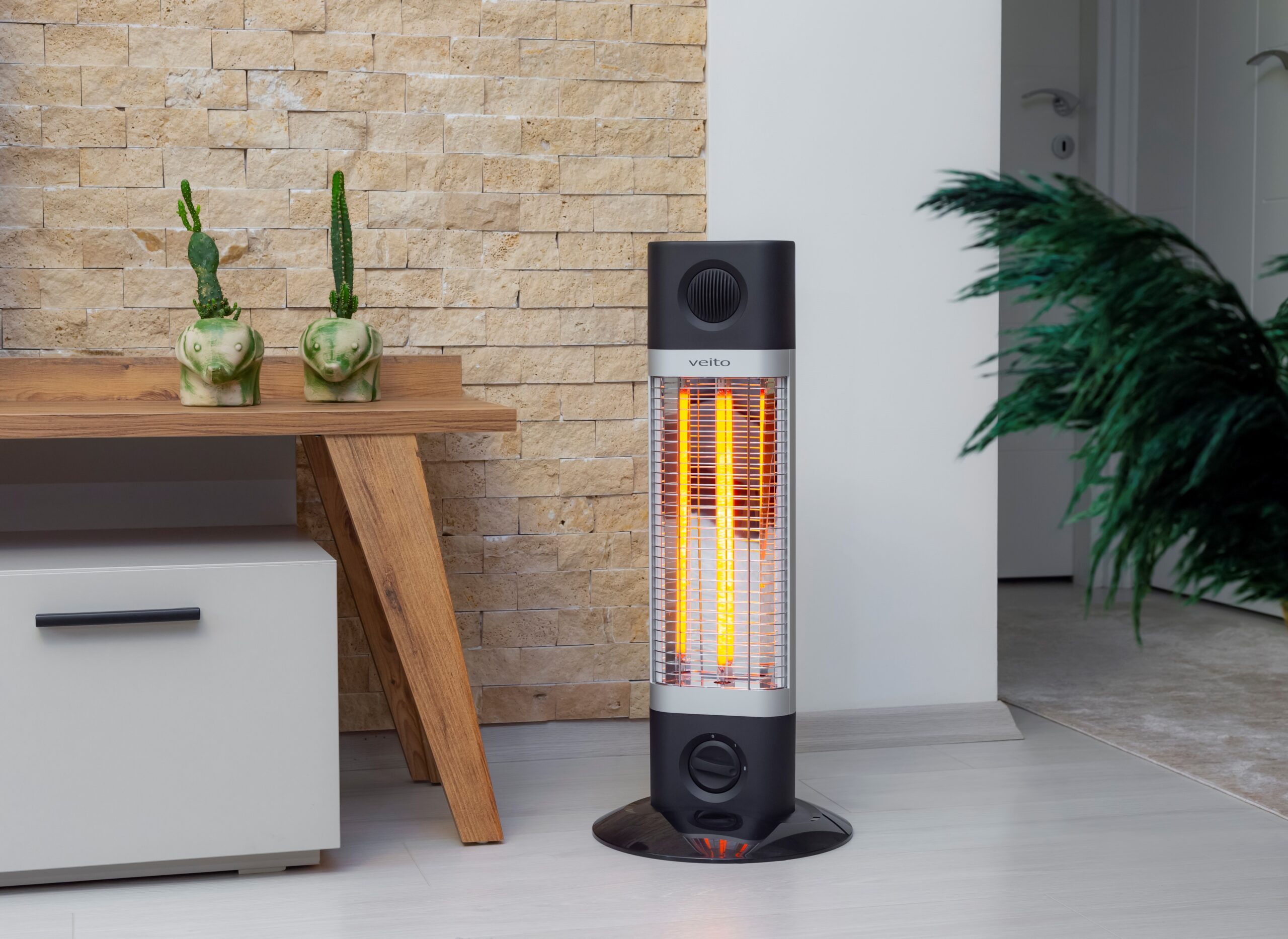
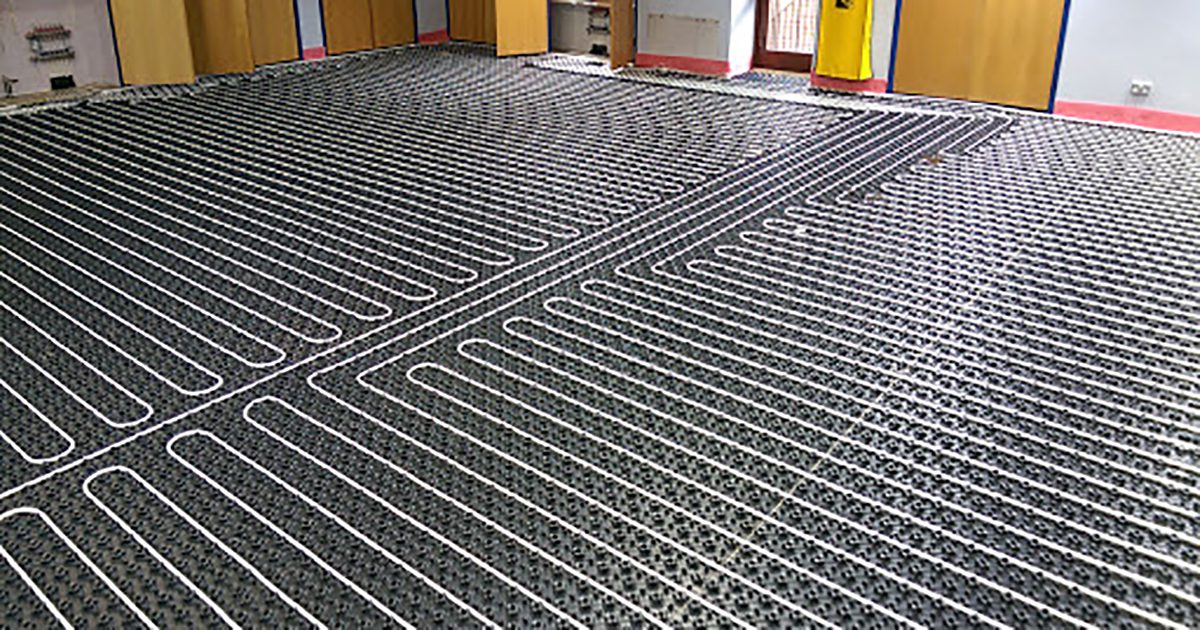
Infrared heaters are a popular choice beneath verandas because they provide instant warmth without overheating the space. In enclosed glass rooms, low-wattage electric heaters, underfloor heating or compact external radiators can also help maintain a steady temperature during colder weather. Dehumidifiers are useful in fully enclosed areas where moisture levels naturally rise, and they can be particularly effective in winter when ventilation is reduced. Some homeowners incorporate a small log burner or outdoor-style fire cube into a glass room for additional warmth and ambience, provided the unit is installed with proper ventilation and positioned safely.
Maintaining a consistent temperature prevents the microclimate beneath the veranda from fluctuating too quickly, helping to keep the glazing clear.
Managing indoor moisture levels
Humidity inside the home has a direct impact on condensation levels outside. Everyday activities such as cooking, boiling the kettle, drying clothes or running a tumble dryer can significantly increase indoor moisture. If your veranda sits close to a patio door, that moisture can migrate into the space and settle on cooler glass surfaces.
Keeping internal doors closed while cooking or showering, using extractor fans and allowing the home to ventilate naturally all help reduce the amount of moisture that drifts toward your outdoor structure. These small habits help stabilise the environment underneath the veranda, particularly during the early morning when condensation is most likely to form.
Design choices that improve condensation control
Because all Fleming verandas and glass rooms are made to order, we help you choose configurations that naturally minimise condensation. Glass rooms can be built with sliding, tilt-and-turn or ventilation-friendly panels that encourage airflow. Louvred roofs or opening sections also allow warm air to escape upwards, keeping humidity balanced.
Polycarbonate roofing retains more warmth than glass and can therefore reduce the temperature difference that triggers condensation. Our 8.8mm laminate glass roofs, meanwhile, offer exceptional clarity and strength but naturally cool more quickly, making ventilation even more important.
Furniture placement also matters. Leaving a small space between furniture and the glazing avoids trapping warm air, preventing localised condensation patches. Even this subtle detail improves overall clarity and airflow.
What not to do
Many homeowners worry that condensation suggests a fault with the veranda, but this is rarely ever the case. Even the most advanced glass rooms will show condensation at certain times, particularly after very cold nights followed by a quick rise in temperature. It is a natural response to weather conditions, not an indication that anything is wrong with the structure.
When cleaning your veranda or glass room, it is important to avoid using lime water, acidic solutions or aggressive cleaning products on frames and structural components. These substances can damage the protective powder-coated finish, leading to discolouration, surface degradation or premature wear over time. Mild, non-abrasive cleaners and warm soapy water are more than sufficient for routine maintenance and help preserve the appearance and longevity of aluminium frames and fixings.
The goal is not to remove condensation entirely — which is physically impossible in British weather — but to control it through ventilation, gentle heating and consistent daily habits.
Everyday habits that keep condensation under control
Simple routines can make a noticeable difference. Opening the space for a short period each day refreshes the air and reduces moisture build-up. Avoid placing plants directly against glazing, as they naturally release moisture. In colder months, gently heating the area before use helps stabilise the temperature and reduces early-morning condensation. Wiping away visible moisture protects seals and frames in the long term.
These small changes help your veranda remain clear, bright and comfortable throughout the year.

Examples of useful products
Some homeowners choose to use a compact dehumidifier in enclosed glass rooms to help manage moisture levels during colder months when ventilation is naturally limited. One example of the type of appliance some customers select for domestic moisture control can be viewed here.
A gentle heat source can also help reduce sudden temperature changes. Infrared heaters are often chosen for use beneath verandas or within enclosed glass rooms because they provide steady warmth without overheating the space. An example of the type of heater suited to this purpose can be seen here.
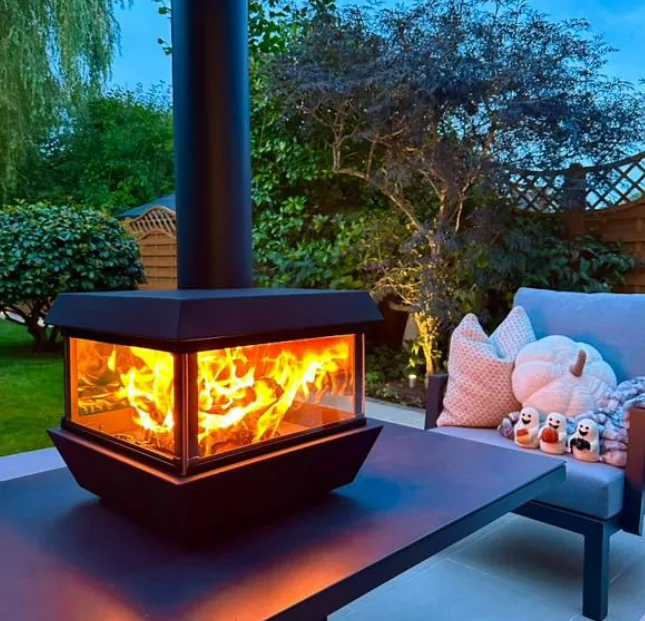
Some homeowners also incorporate feature heating elements such as compact outdoor fire cubes into their glass rooms to create warmth and ambience, provided suitable ventilation and positioning are maintained. An example of this type of product can be seen here.
Some homeowners also use robotic glass cleaners to help maintain clear glazing, particularly on larger roof panels or hard-to-reach vertical glass. These devices gently adhere to the surface and move systematically across the glass, helping to remove moisture residue, light dirt and marks without the need for ladders or manual wiping. While they do not prevent condensation forming, they can be a convenient maintenance tool for keeping glazing clear and presentable, especially during winter months when condensation is more frequent.
These examples are provided for general reference only and are not endorsements of any specific product or manufacturer.
A comfortable space all year round
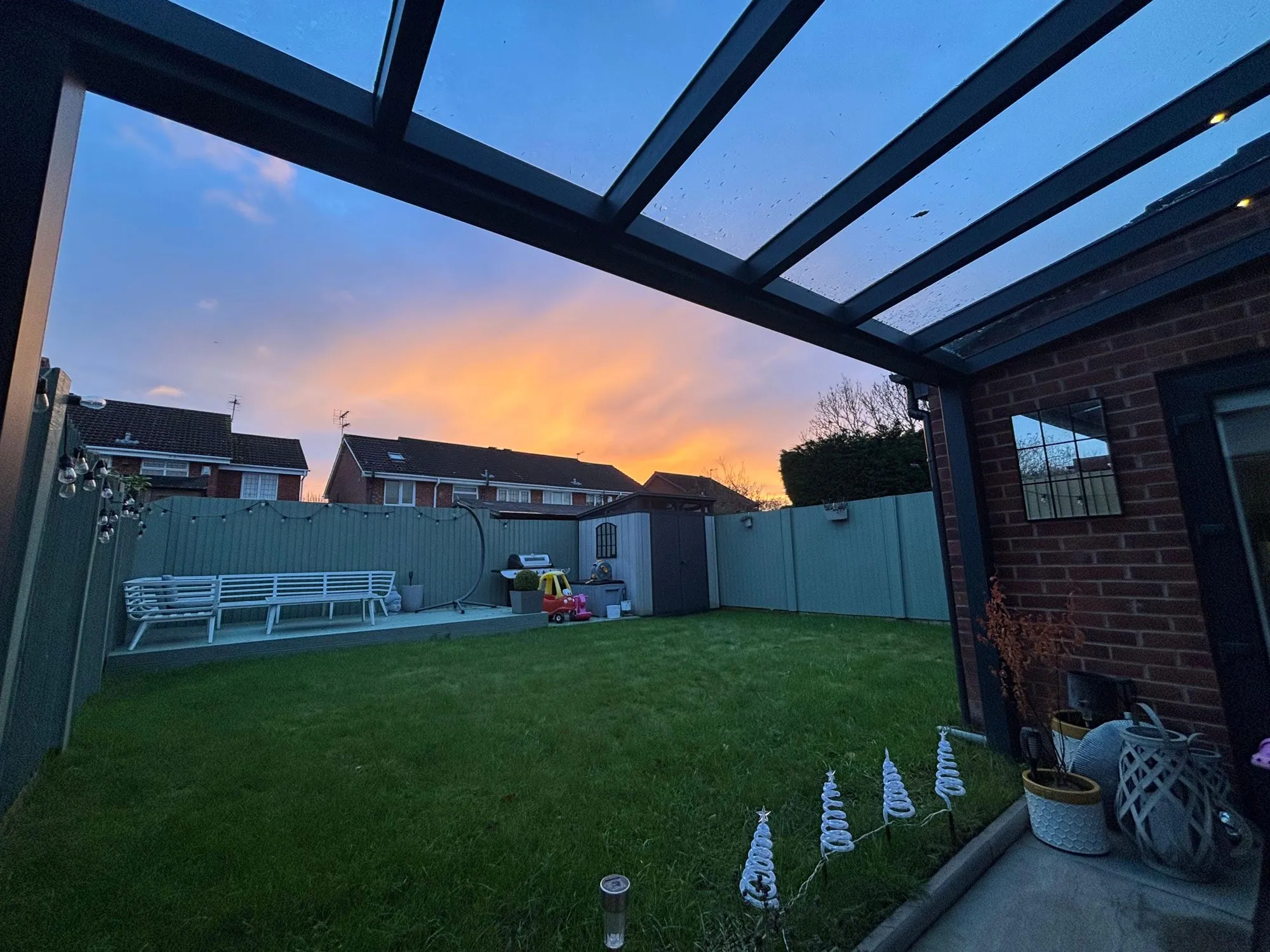
Condensation is part of the natural behaviour of glazed structures in the UK climate, but with the right combination of ventilation, temperature control and good habits, it can be managed very effectively. Whether you enjoy your veranda for morning coffees, weekend entertaining or quiet moments in the garden, reducing condensation keeps the space bright, clear and inviting throughout the year.
If you are considering a new veranda or glass room, or would like professional advice for an existing structure, our team is here to help. As members of the Guild of Master Craftsmen and Which? Trusted Traders, Fleming Verandas provides expert guidance, precision installation and ongoing support to help you make the most of your outdoor living space.
To discuss your project, contact our team on 01902 212 331 or email [email protected] for friendly advice and a free design consultation.





Got questions? Here are some of our most common!
Why does my veranda have more condensation than my neighbour’s, even though ours look similar?
Condensation levels vary depending on how each home manages airflow, temperature differences and nearby moisture sources. A veranda positioned closer to patio doors, kitchens or garden planting will naturally experience more humidity. Small differences in orientation, shading and how often the space is ventilated can also affect how quickly moisture settles on the glass.
Is condensation a sign that my veranda has a leak or a fault?
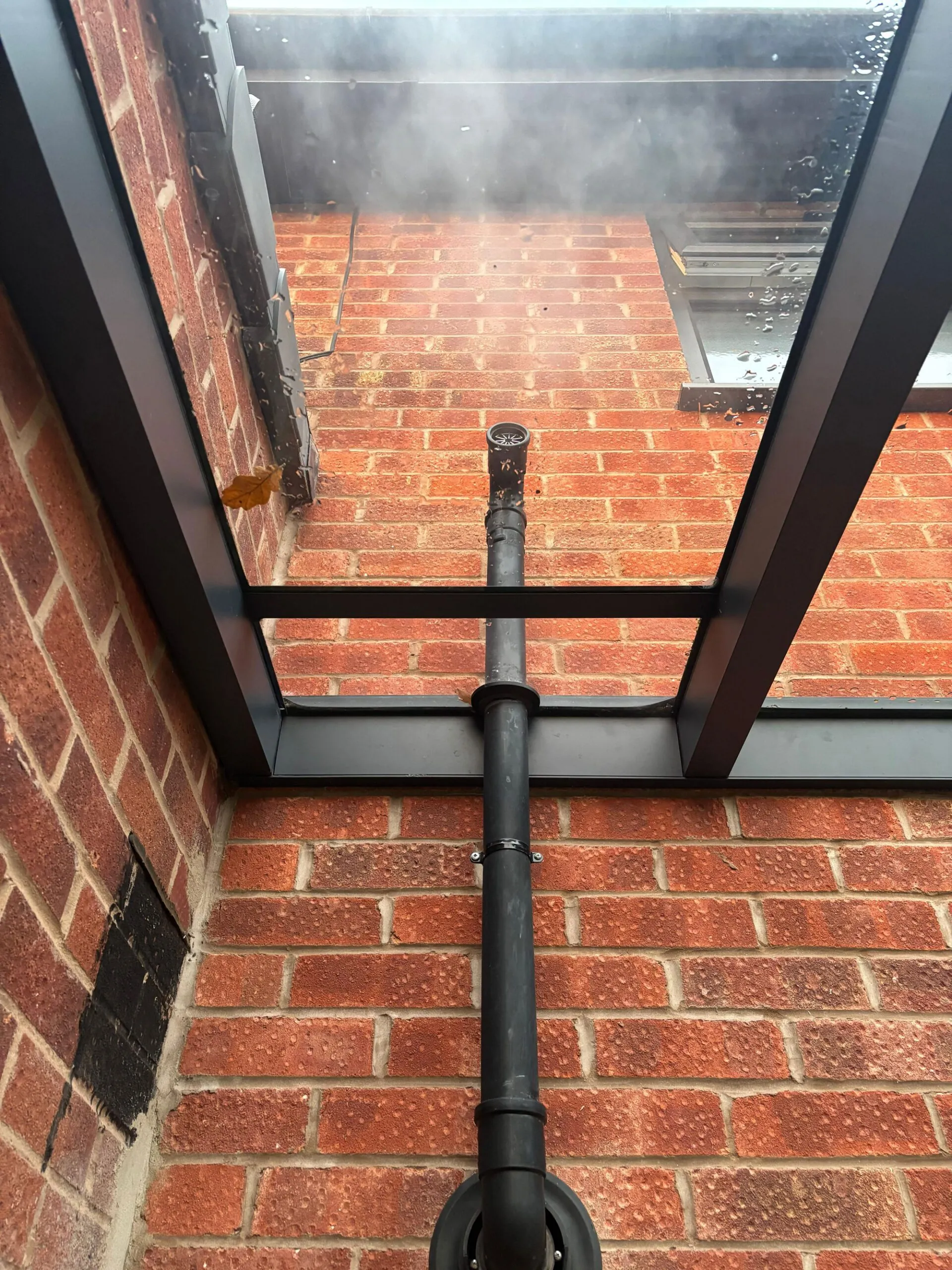
No. Condensation forms on the inside surface of the glass because of temperature differences and humidity, not because water is entering the structure. Even a perfectly sealed and watertight veranda will show condensation in certain weather conditions. This is a natural behaviour of glass and does not indicate a structural problem or installation issue.
Will double-glazed glass prevent condensation?
Double glazing reduces heat transfer, but it does not eliminate condensation. In outdoor structures and garden rooms, the inner glass can still be cooler than the surrounding air, especially overnight. Good ventilation, stable temperature and managing moisture levels are far more effective than relying on glazing thickness alone.
Can I keep my glass room fully closed all winter without causing issues?
Fully enclosing the space throughout winter can increase humidity levels unless you introduce controlled ventilation or gentle heating. Keeping the space completely shut for long periods traps moisture and leads to more frequent condensation. Opening a door or panel for short daily intervals is usually enough to maintain a healthy balance.
Will adding side screens or extra glass panels make condensation worse?
Adding vertical glazing naturally changes how air flows through the structure, and enclosed spaces can accumulate more humidity. However, if the design includes opening panels or vents, and you follow simple daily ventilation routines, condensation can remain well controlled. Proper design ensures comfort rather than increasing condensation.
Can I insulate my veranda to stop condensation?
Insulation helps regulate temperature but cannot stop condensation entirely. Outdoor structures are exposed to rapid environmental changes, and insulation alone cannot manage humidity. Ventilation and airflow always play the more important role. Over-insulating or sealing the space tightly can actually increase condensation.
Can moisture damage the veranda frame or roof seals?
Occasional condensation will not harm the structure, especially with aluminium frames and high-quality gasket systems. It is still good practice to wipe away visible moisture, particularly around seals, during colder months. Regular ventilation prevents prolonged dampness and helps protect the materials long-term.
Would installing blinds or under-awnings reduce condensation?
Blinds and under-awnings help regulate heat and glare, but they do not prevent condensation because they do not affect humidity levels. However, shading can reduce the speed of temperature changes in summer and autumn, making the transitions more gradual and slightly reducing the conditions that encourage moisture to form.
Does the type of flooring beneath the veranda make a difference?
Yes, to a degree. Porcelain tiles, composite decking and treated slabs retain less moisture than timber, soil or natural stone. If the ground beneath or around the structure holds moisture, humidity levels can increase, especially after rainfall. Using low-absorbency flooring and allowing it to dry naturally helps maintain a stable environment.
Should I leave a heater on overnight to prevent condensation?
It is generally not necessary. Most homeowners find that gently warming the space before use, combined with short periods of daily ventilation, is enough to reduce visible condensation. If using electric heaters or infrared units, a low, consistent setting is more effective than high, intermittent bursts of heat.