




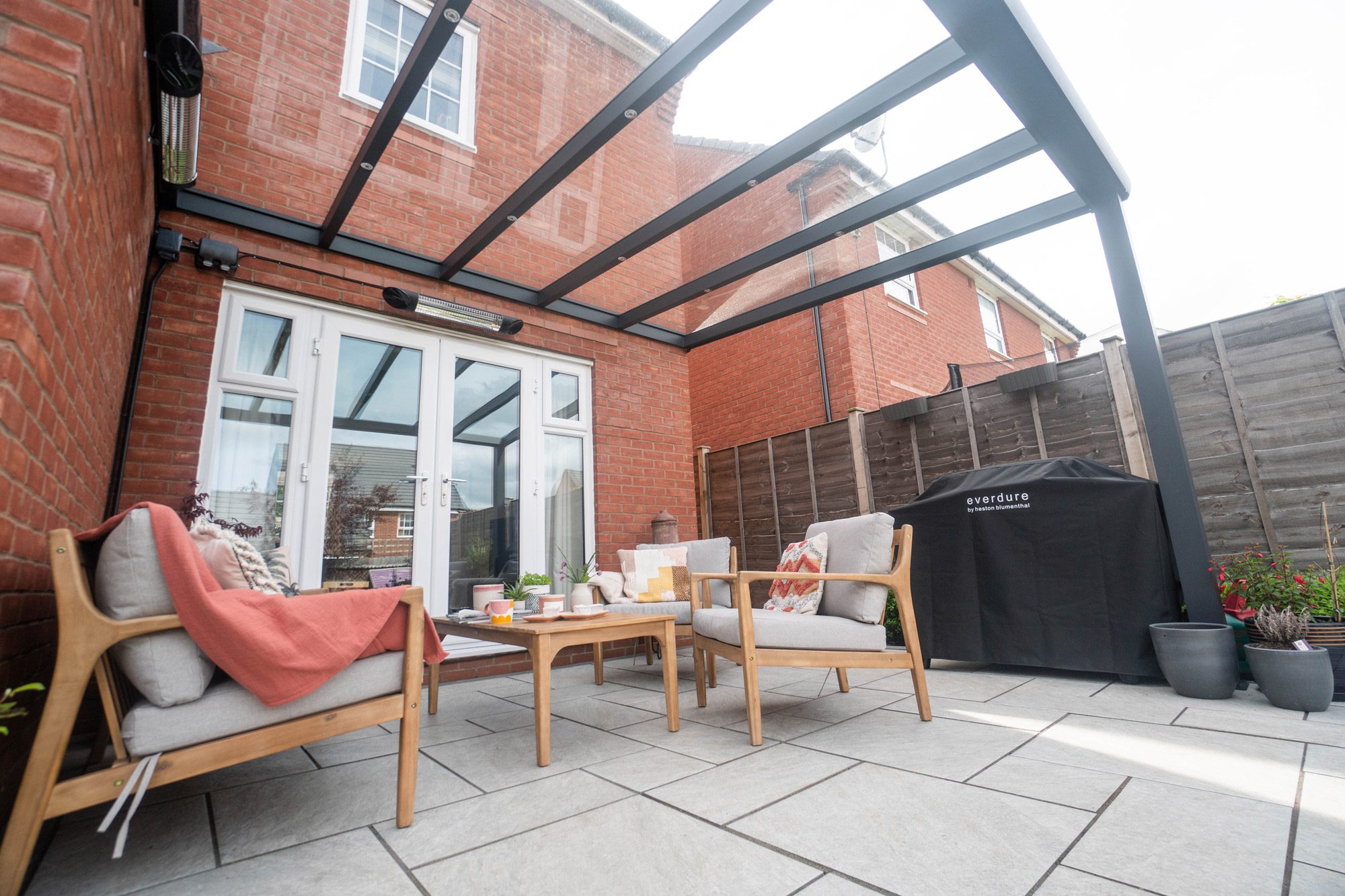
Planning a new veranda or glass room and wondering whether the patio or the veranda should come first? It’s one of the most common questions we’re asked during a home design appointment — and the answer, every single time, is the same: the patio comes first. Always. While that might sound like a simple piece of advice, the reason behind it — and the level of planning it requires — is exactly the kind of detail that separates a beautiful, long-lasting outdoor living space from one that causes you headaches further down the line.
This blog walks you through why your patio should always come first, what we look for when designing the foundations for your veranda or glass room, how drainage plays a critical role at the planning stage, and how Fleming Verandas works directly with your landscaper or contractor to make sure the whole project comes together perfectly. Put simply — we want you to do it right, and pay once. Not twice.
Why your patio should always be laid before your veranda
A veranda or glass room is only ever as solid as what sits beneath it. The aluminium framework, glass roof panels, sliding doors, and any future modular additions all rely on a stable, level, well-drained base to perform exactly as they should — both on day one, and for decades to come. That base is your patio.
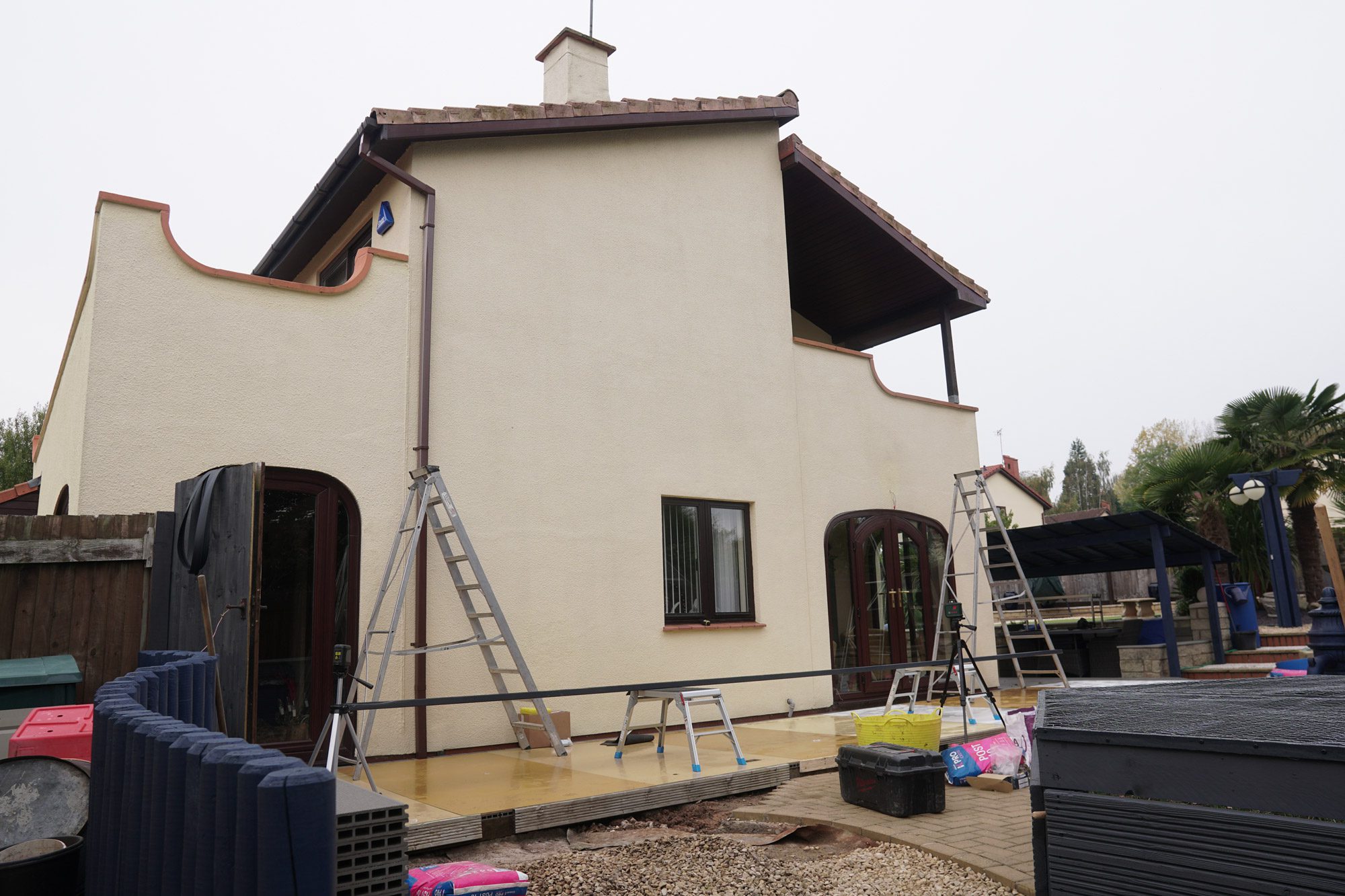
When the patio is designed and laid before the veranda is installed, we can confirm the exact location of each support post, build the correct foundations into the patio itself, and make sure drainage is set up to keep water flowing away from your home rather than back towards it. Trying to retrofit a patio around an already-installed veranda is significantly harder, often more expensive, and far more likely to result in compromises that affect the finished look and feel of the space.
Veranda foundations: what we look for under every post
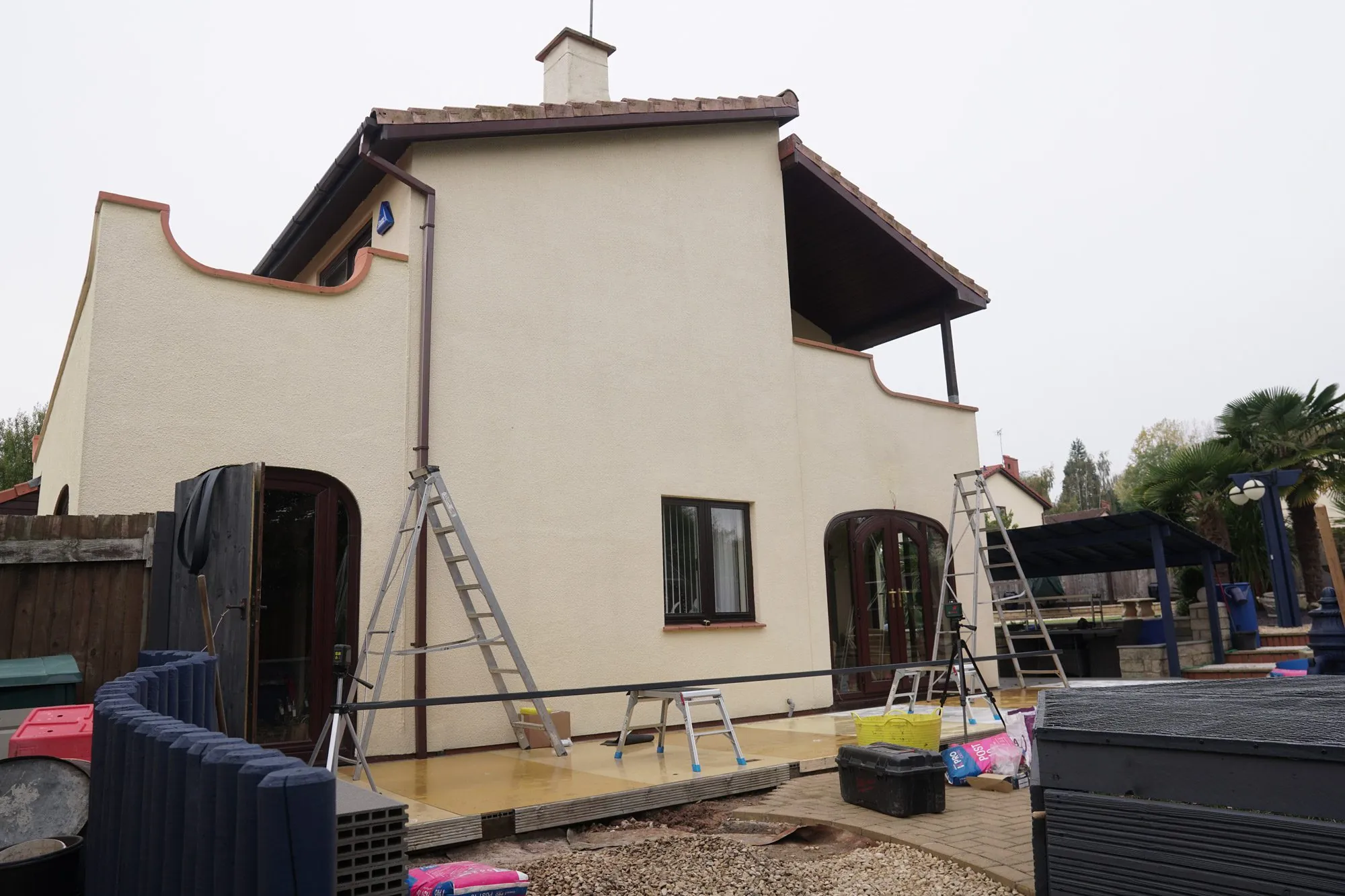
For a standard polycarbonate or glass veranda, we work directly with your landscaper or contractor to specify the foundations beneath each support post. As a minimum, we recommend a concrete pad of 350–500mm square at every post location, laid before the patio surface goes down on top. This gives us a solid, hidden footing to fix into.
Once your patio is finished, our installation team drills directly through the slab and into the concrete pad below, anchoring an internal steel U-profile in place. The veranda post then sits within and is fixed to that U-profile, giving you a clean, elegant finish at floor level with all the structural strength hidden beneath. From the outside, you’d never know what’s holding it all together — which is exactly the point.
Foundations for the side walls and glass sliding doors of a full glass room are slightly different and need to be specified individually. This is something we always discuss in detail during your full site survey.
Patio drainage for a veranda or glass room: the detail homeowners miss
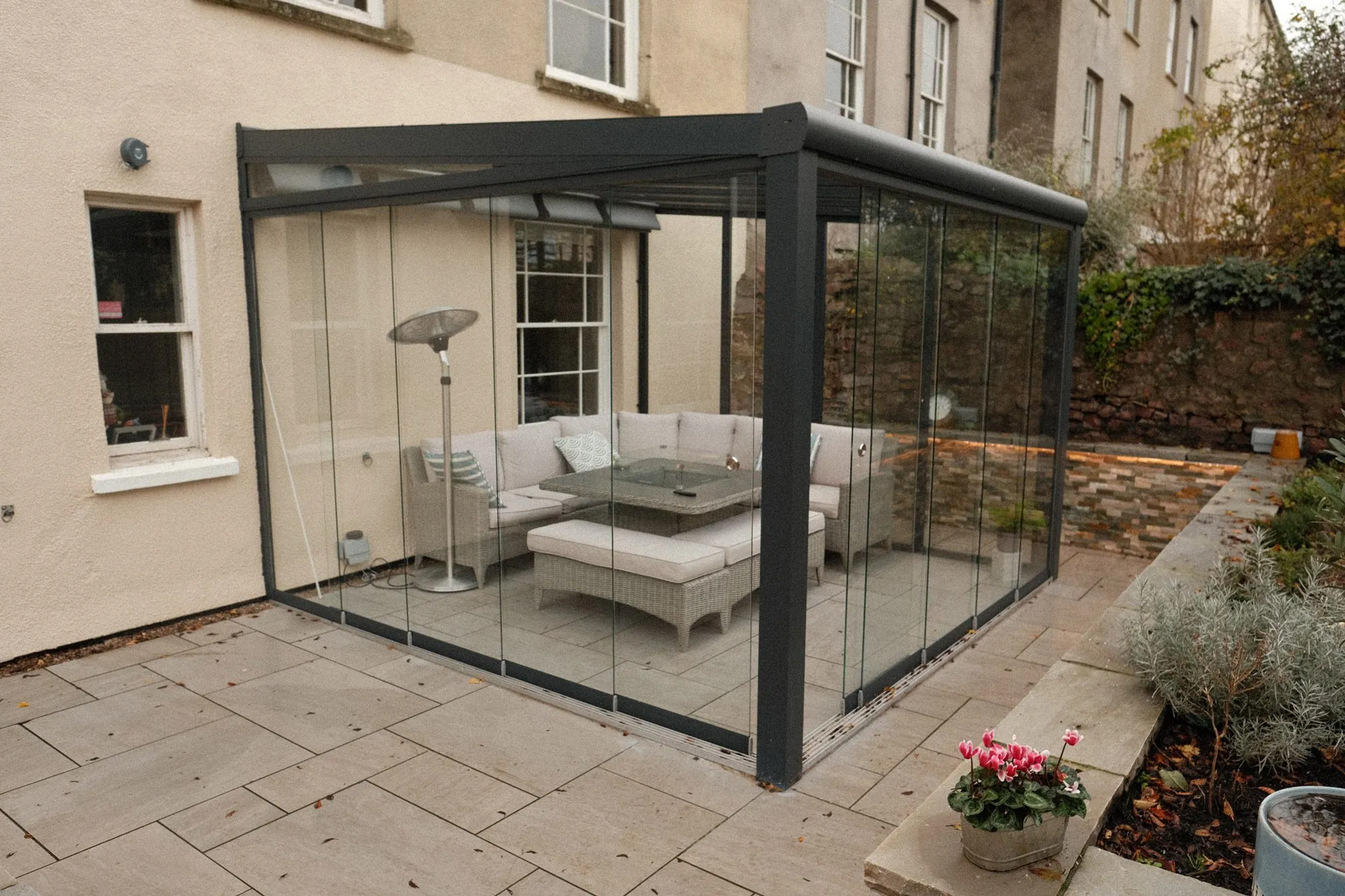
Drainage is one of the most important — and most commonly overlooked — elements of planning a patio for a veranda or glass room. Get it wrong, and you can end up with water running back towards your home, pooling under the structure, or worst of all, running into the room itself if you’ve opted for glass sliding doors or fixed panel walls.
The golden rule: your patio should never fall towards the property. A patio that slopes back towards the house — even by a small amount — will channel rainwater straight at your foundations, and in the case of a full glass room, water will either find its way under the doors or seep through the grout lines and into the room. It’s the kind of mistake that’s almost impossible to fix once the patio is down.
At the same time, a completely flat patio isn’t the answer either. Without a slight fall away from the property and out towards the garden, water will pool on the surface rather than draining away. We recommend that every patio is laid with a gentle run-off heading away from the house, ideally combined with an ACO drainage channel running along the outer edge of the patio (or mid-way through, for larger patios) to capture surface water and direct it into your main drainage point.
This is exactly the kind of detail we plan with your landscaper at the design stage. It costs very little to get right at the start — and is hugely expensive to put right later.
Why we work directly with your landscaper or patio contractor
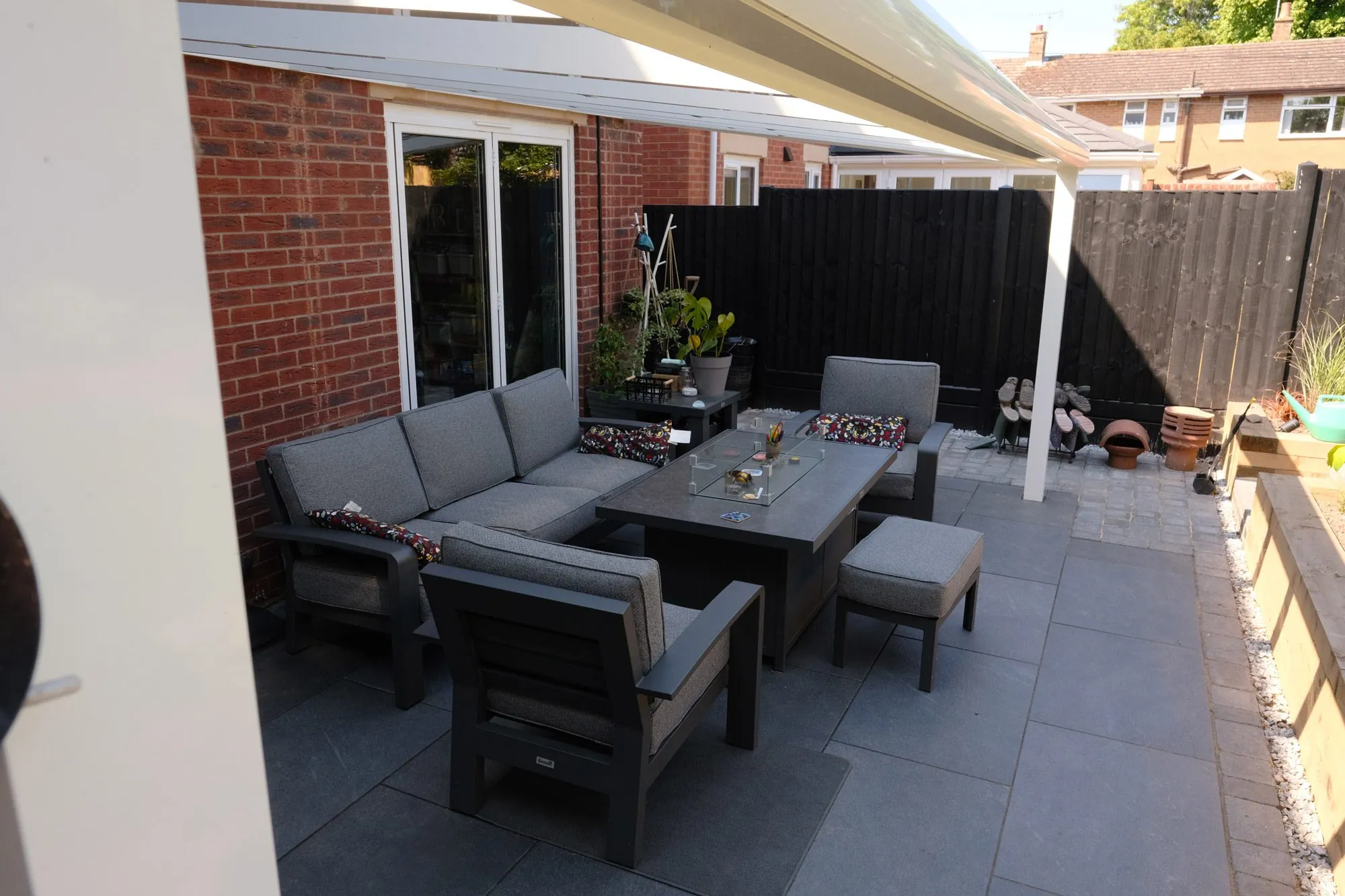
This is where Fleming Verandas really takes the stress out of the project. Most of our customers aren’t builders, landscapers, or project managers — they’re homeowners who want a beautiful new outdoor living space without having to coordinate two separate trades and worry about whether everyone’s on the same page.
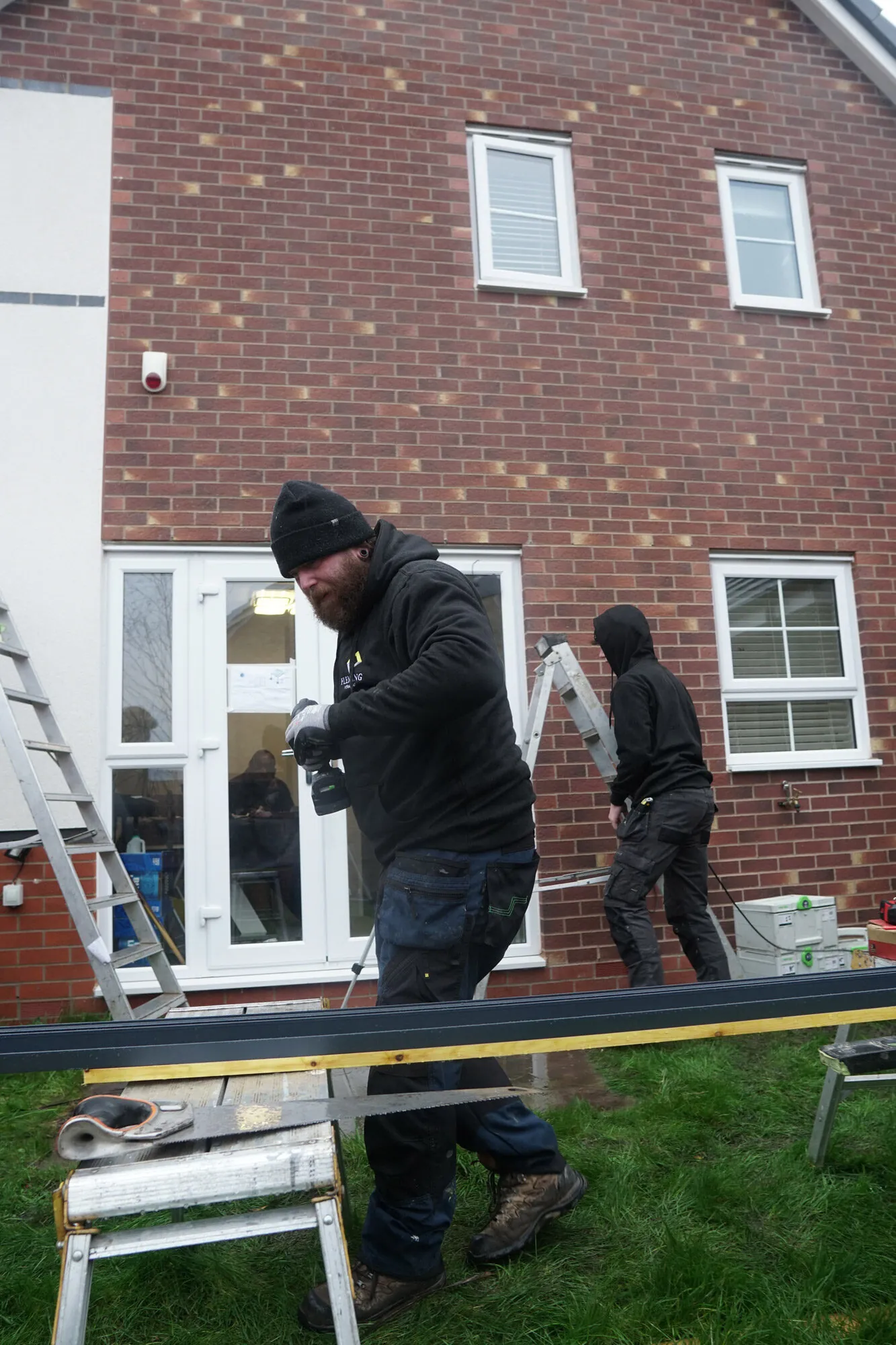
We work directly with your chosen landscaper or contractor. We provide exact measurements for post locations, pad sizes, and depths. We confirm the patio fall and drainage strategy. We make sure they understand what we need before they ever lay a slab — and we’re available to answer questions throughout. When your patio is finished, our team arrives knowing exactly what they’re walking into, and your veranda or glass room can be installed with no surprises and no compromise.
It’s a simple philosophy, but one that genuinely sets us apart: do it right, pay once. Not twice.
Installing a veranda on an existing patio: what to expect
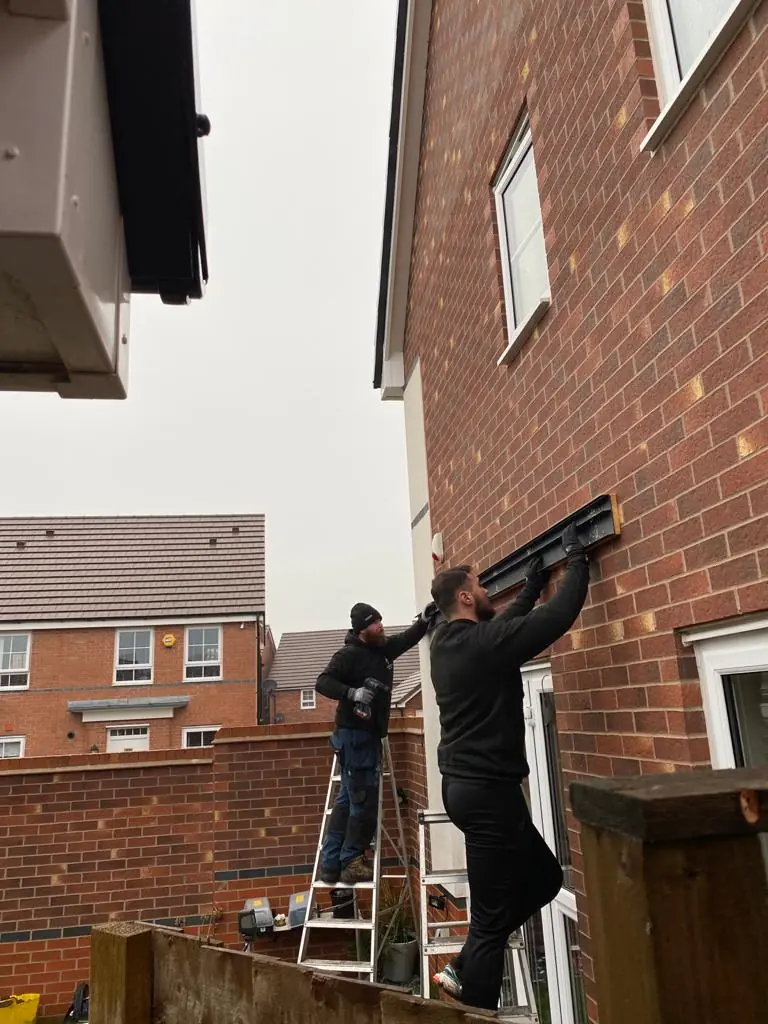
If you already have a patio — whether it was laid recently or years ago — that’s absolutely not a dealbreaker, and certainly not a reason to put off your veranda project. What it does mean is that we’ll need to take a proper look at it during your site survey before confirming the best approach.
Where an existing patio is recent, well laid, and in good structural condition, we can often work with what’s already there. Our surveyor will assess the slab type, the bedding beneath, the fall direction, and the drainage to confirm whether we can fix directly through into solid foundations.
In the worst-case scenario — where the existing patio doesn’t have suitable foundations for the veranda posts — we’ll advise that new foundations need to be laid as part of the installation. In practice, this means our team will carefully excavate a small area of approximately 250–550mm square at each post location, concrete the posts directly into the ground, and reinstate the patio surface around the finished post. Foundations for side walls and sliding glass doors of a glass room are specified separately, depending on the product and size.
This is always discussed openly and in detail during the full site survey, so you know exactly what to expect long before our installation team arrives.
In summary: getting your patio and veranda right, first time
If you’re planning a veranda, glass room, or even just keeping options open for the future, the order of work matters more than most people realise. Always lay your patio first — but plan it properly. Confirm post locations and foundation specifications with your veranda installer before a single slab goes down. Set up drainage with a clear fall away from your home, and add an ACO channel where appropriate. And finally, choose a veranda company that’s willing to work directly with your landscaper rather than leaving you to manage the relationship yourself.
At Fleming Verandas, we’ve been doing this for years, and we’re more than happy to come out and visit you at home or invite you down to our showroom to talk it through in person. Whether you’re at the very start of planning your patio or you’ve already got the space ready, we can help you take the next step with confidence.
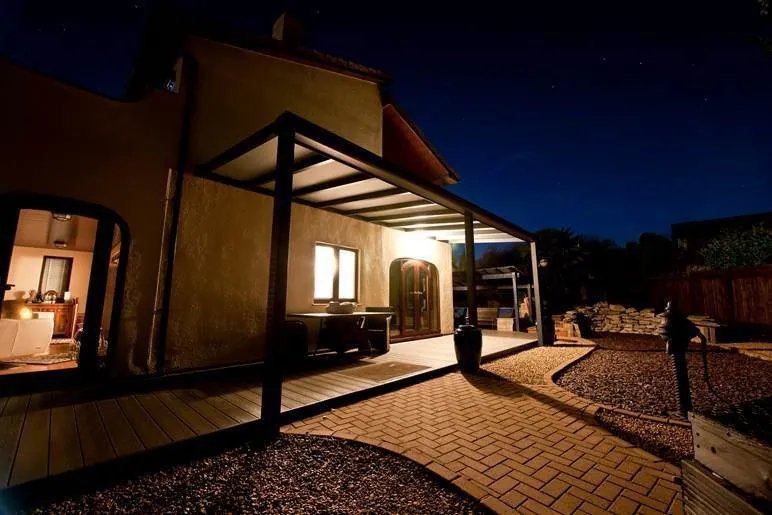
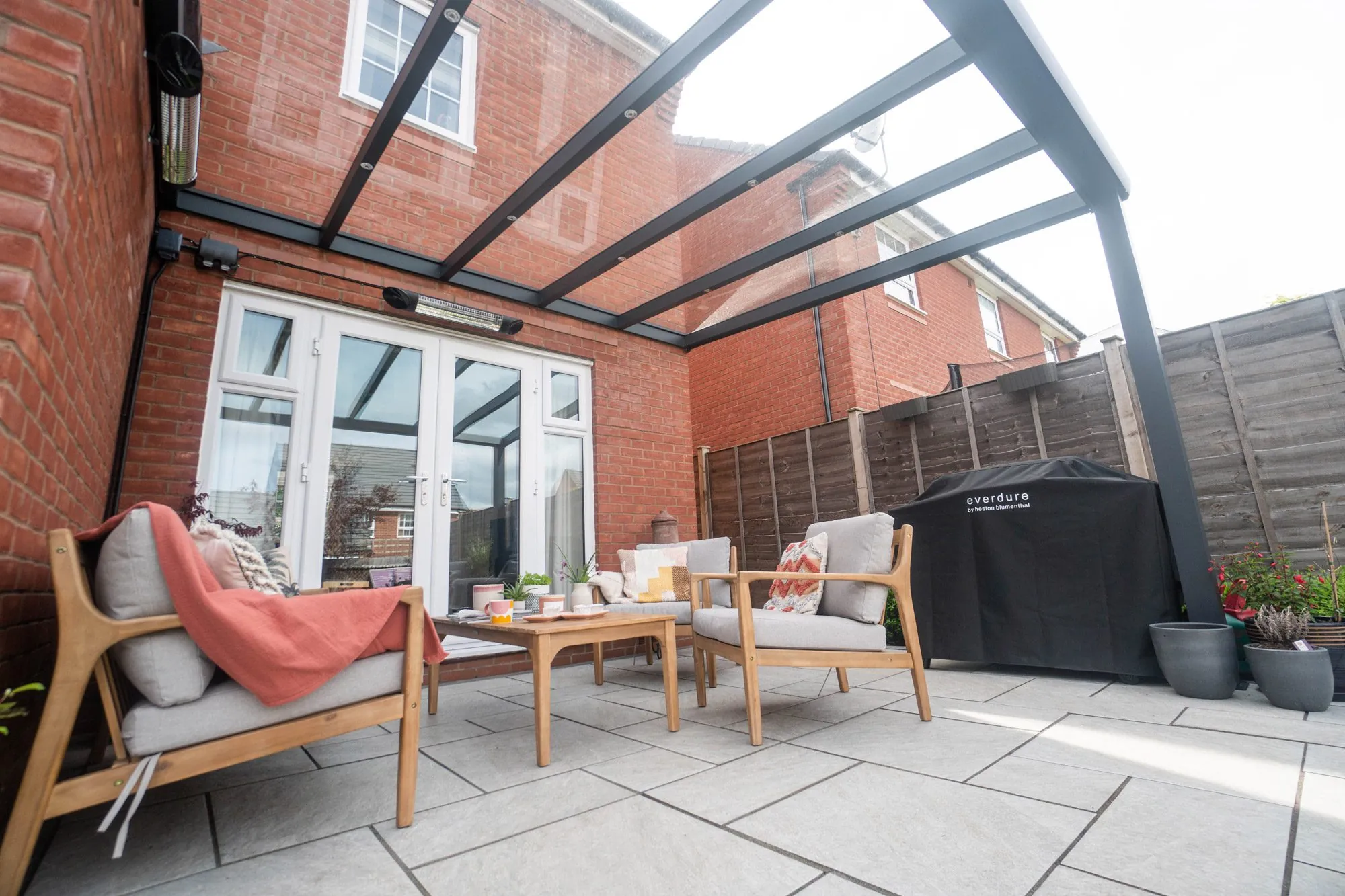
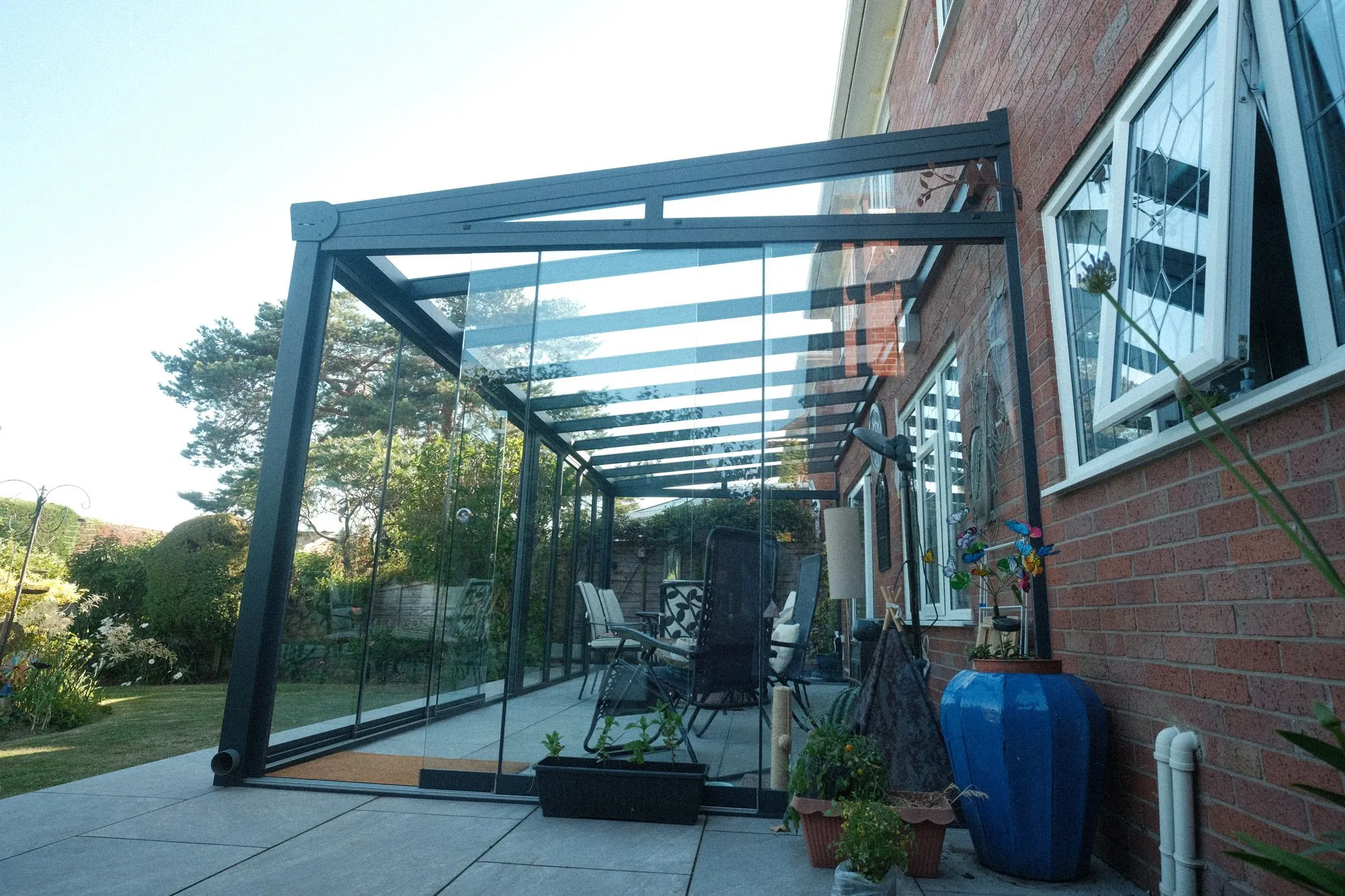
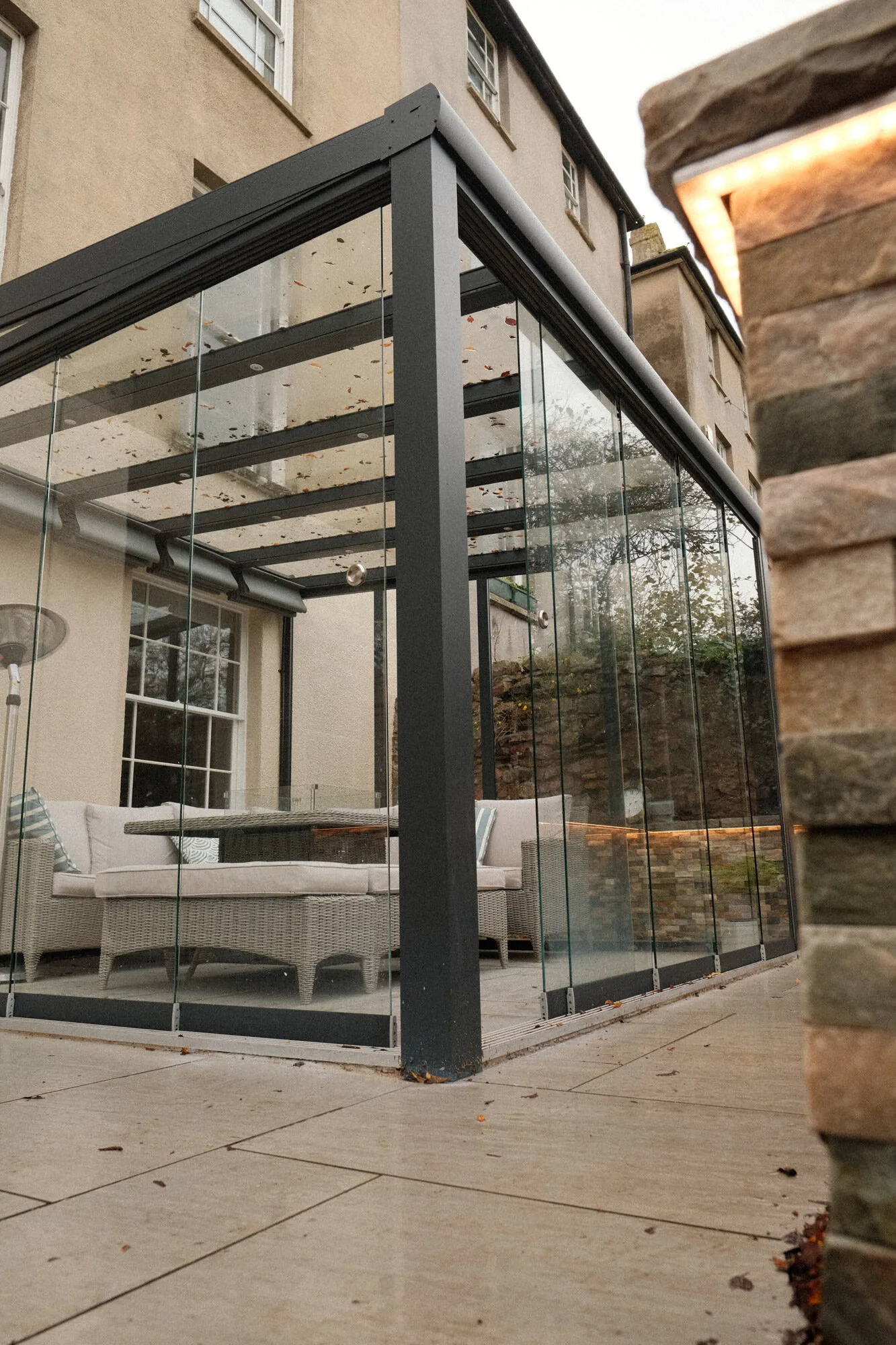
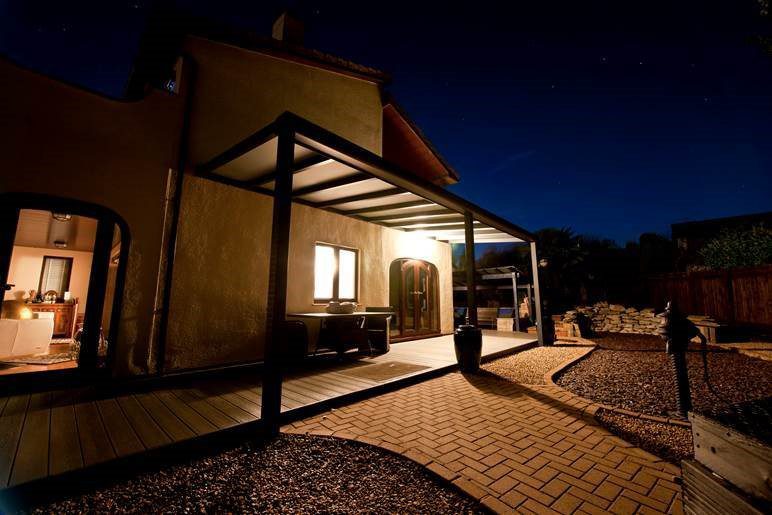
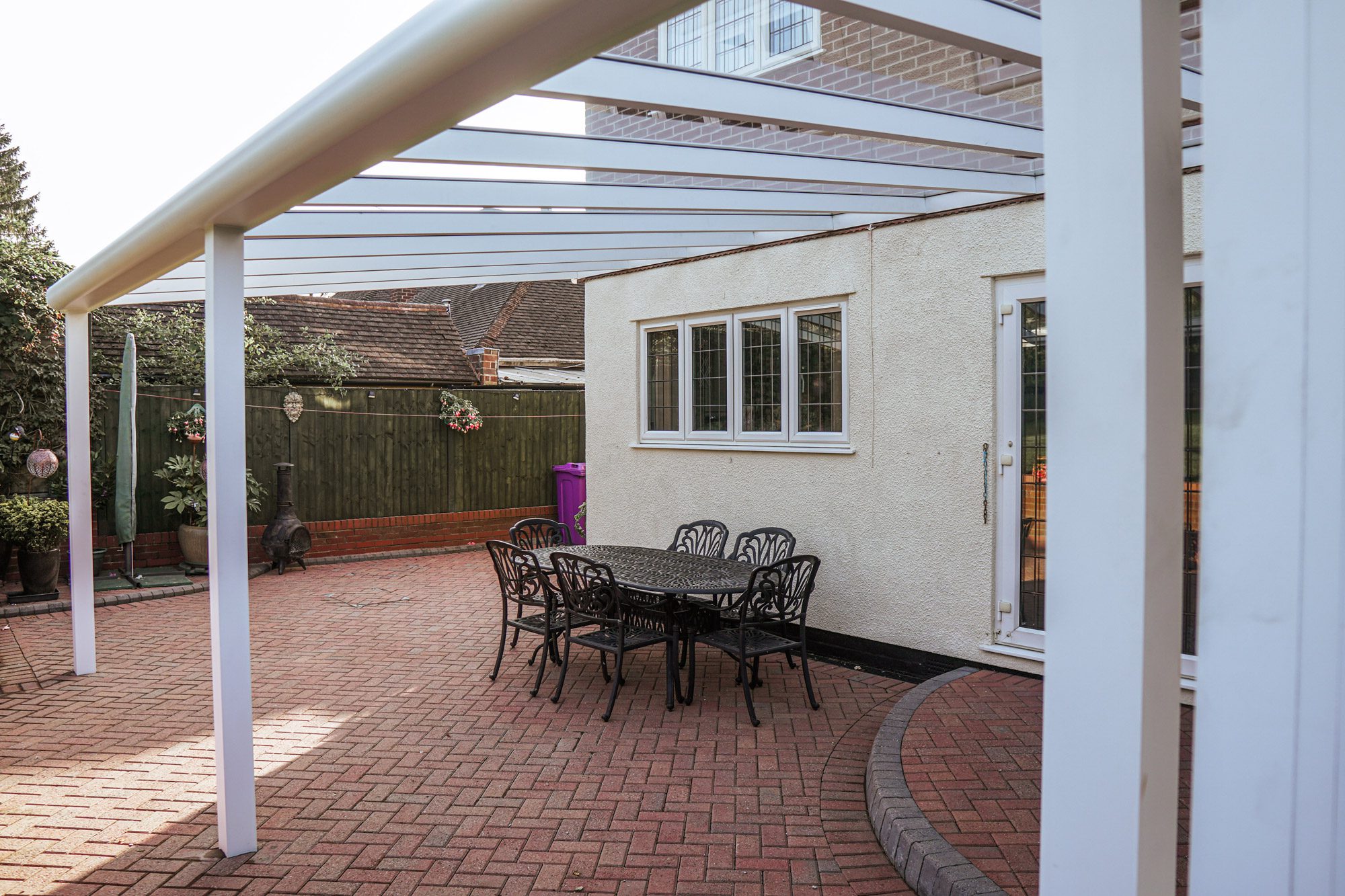
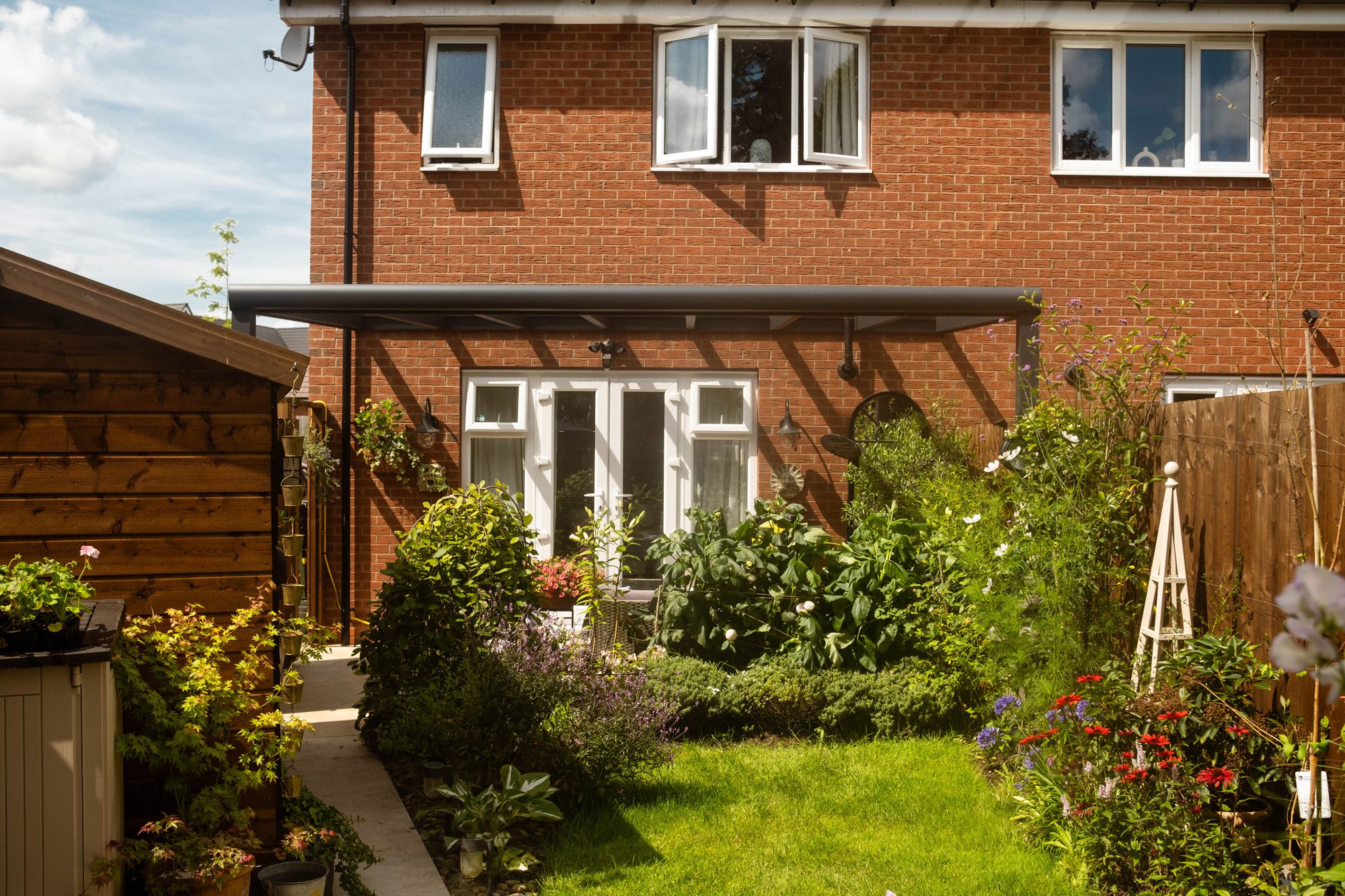
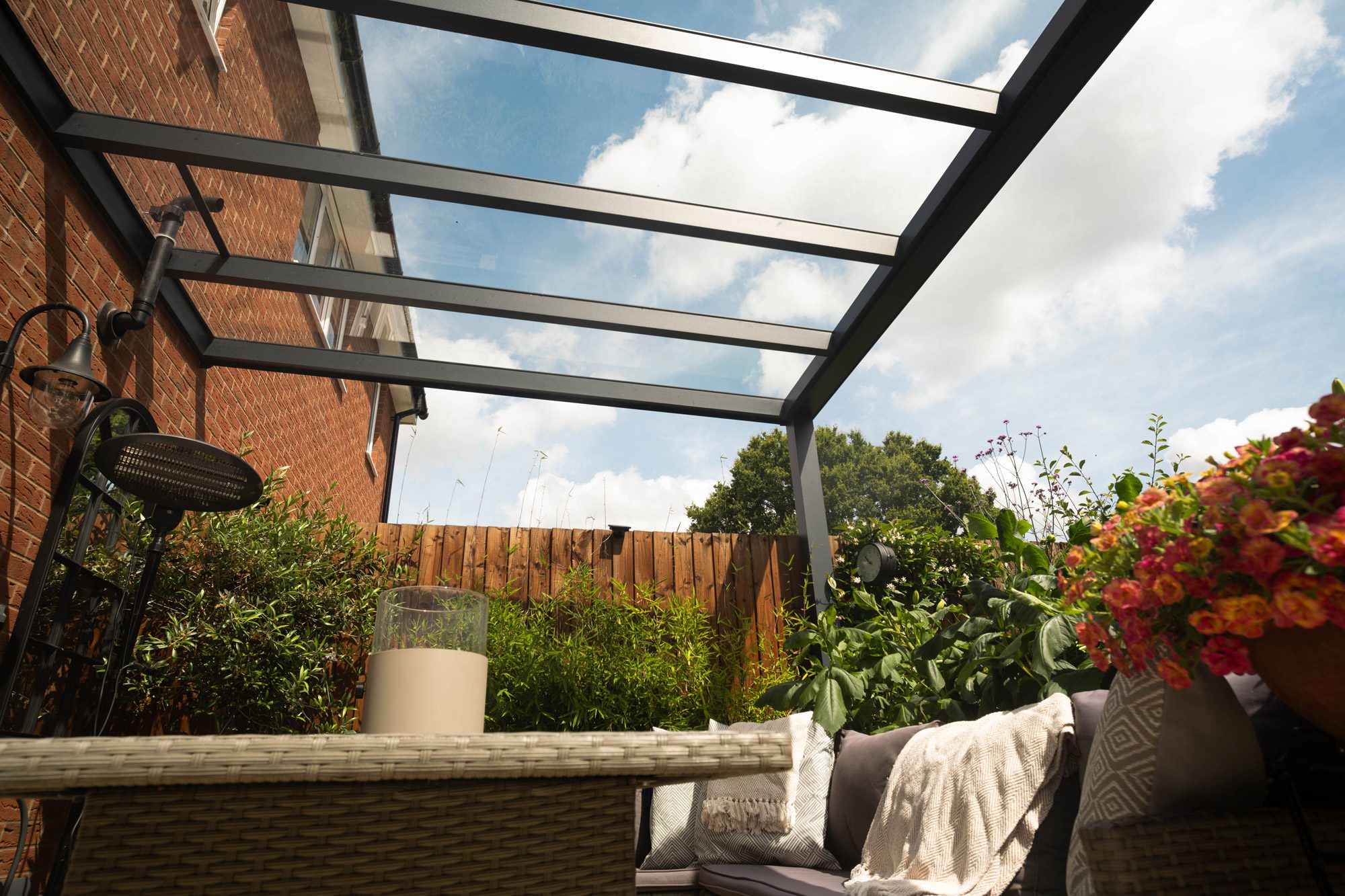
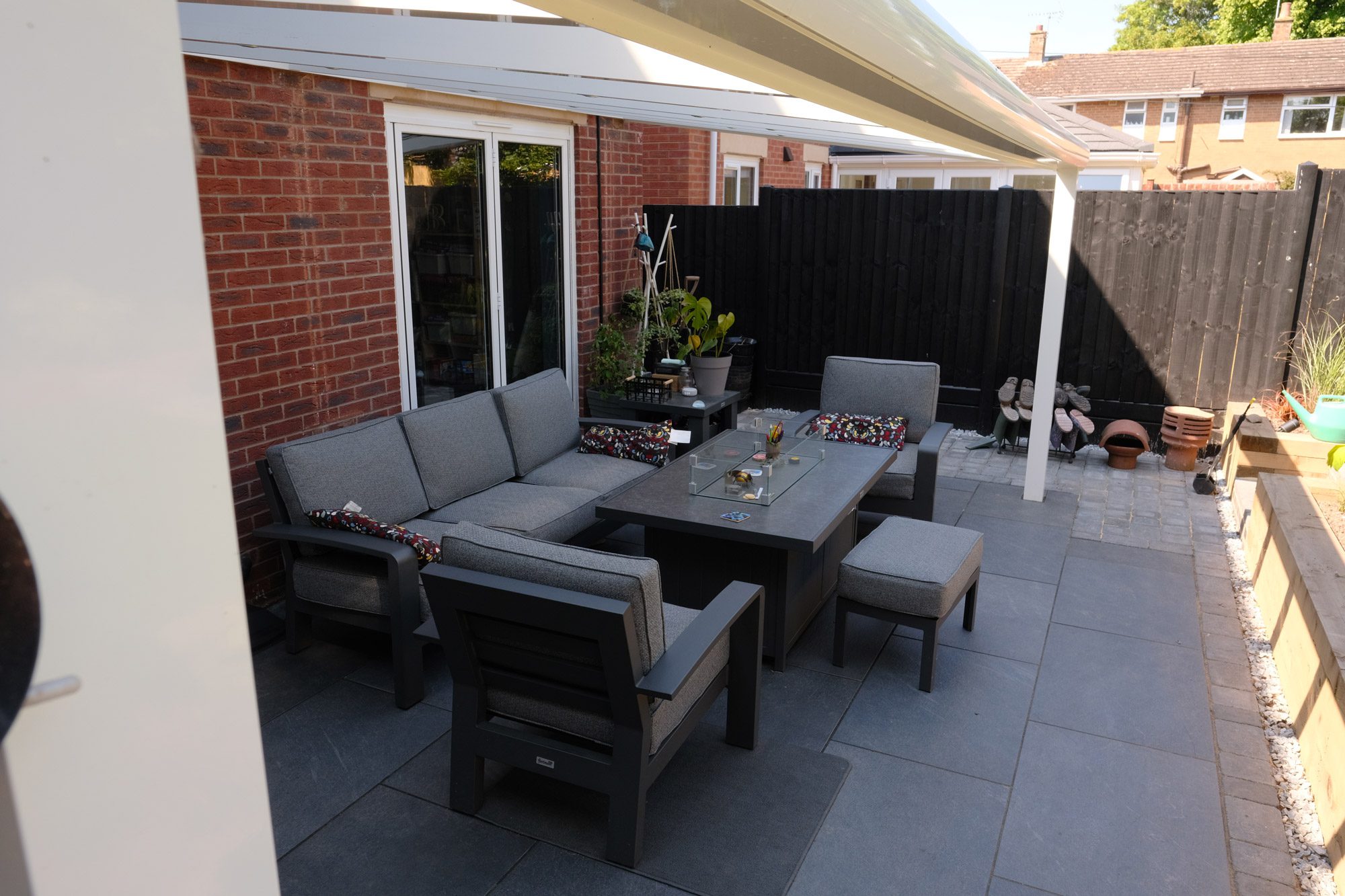
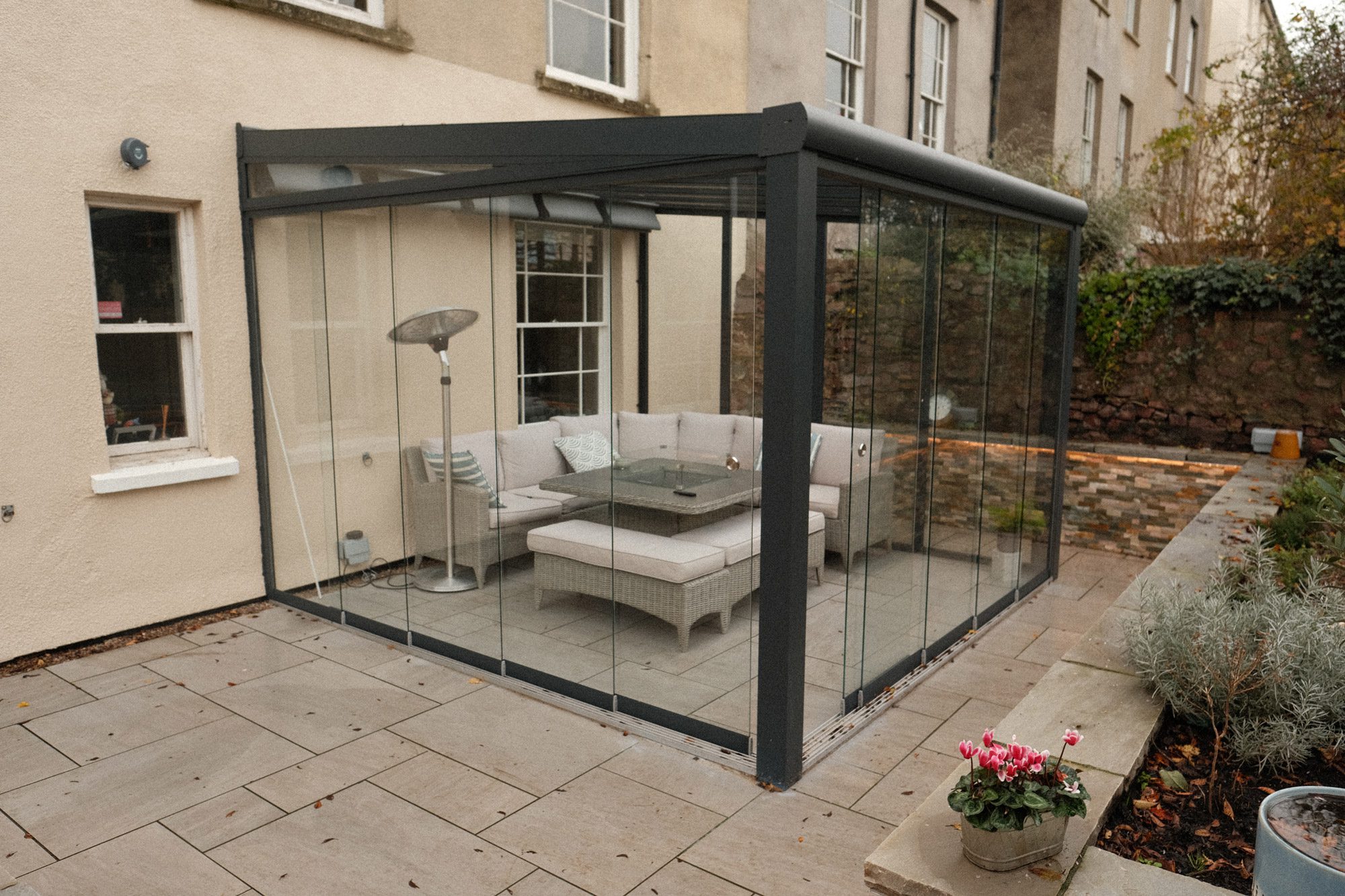
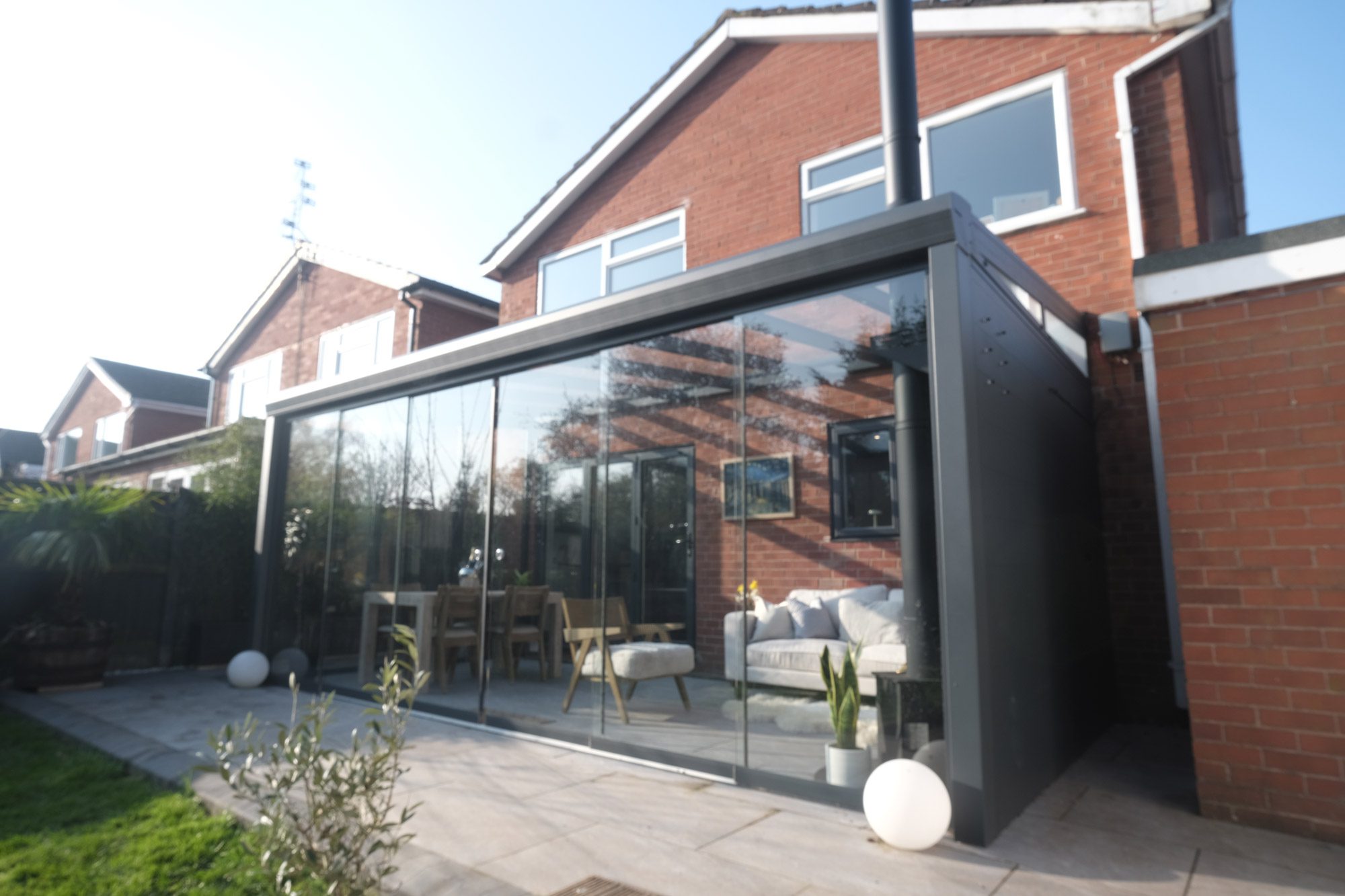
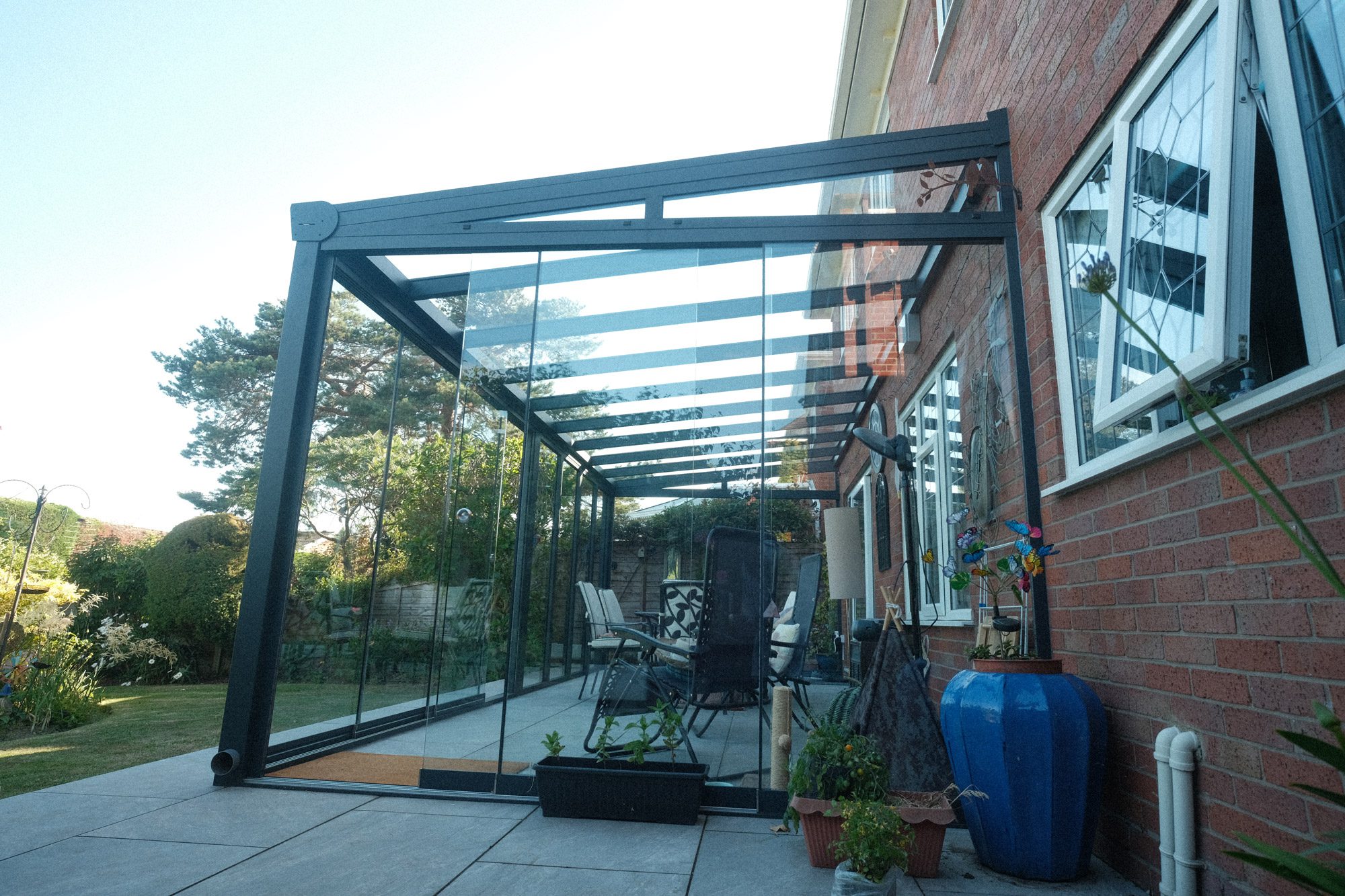
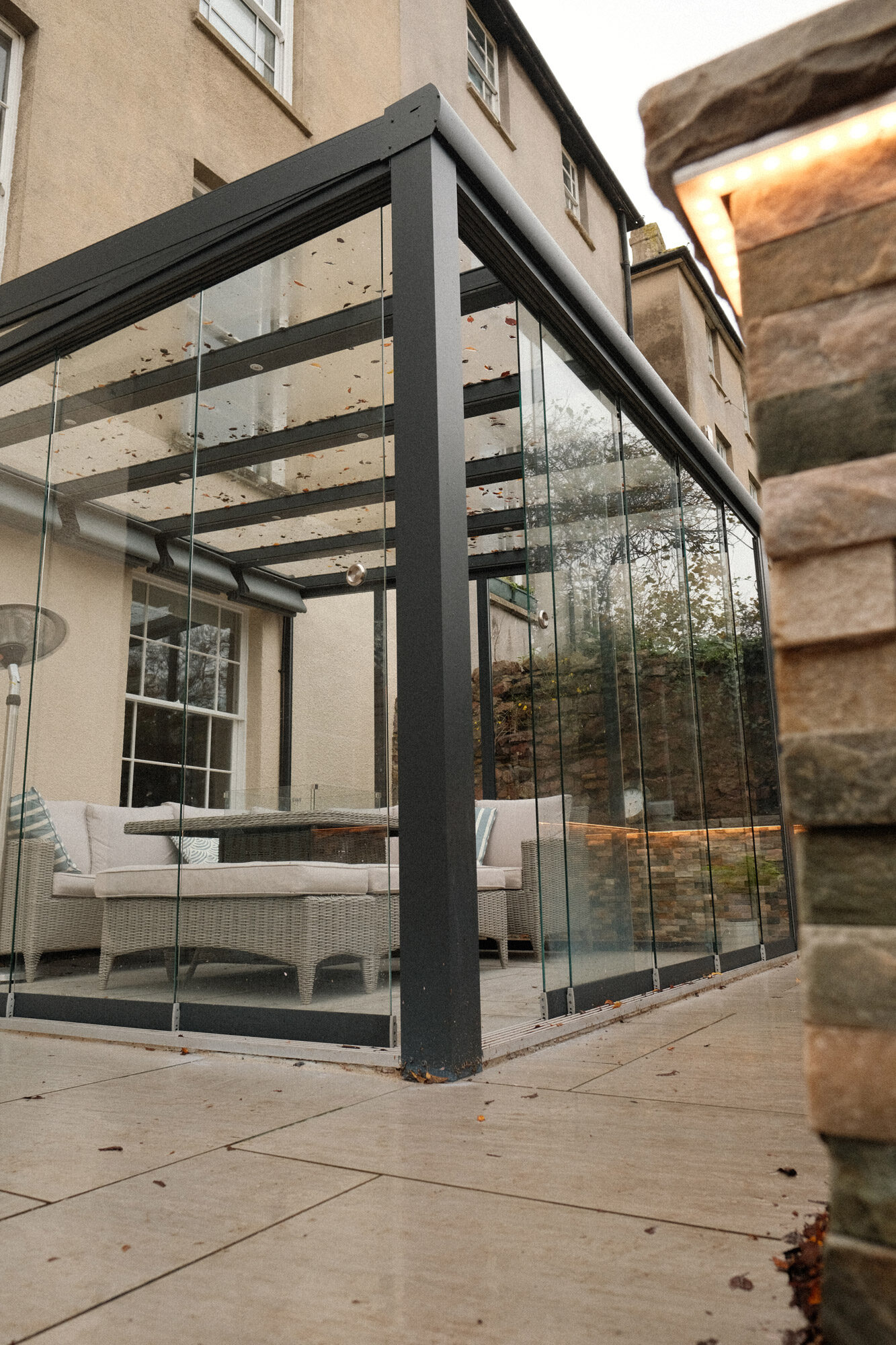
Looking for some inspiration? Click through to see some of our recent veranda and glass room projects, or get in touch to book your free home design visit.
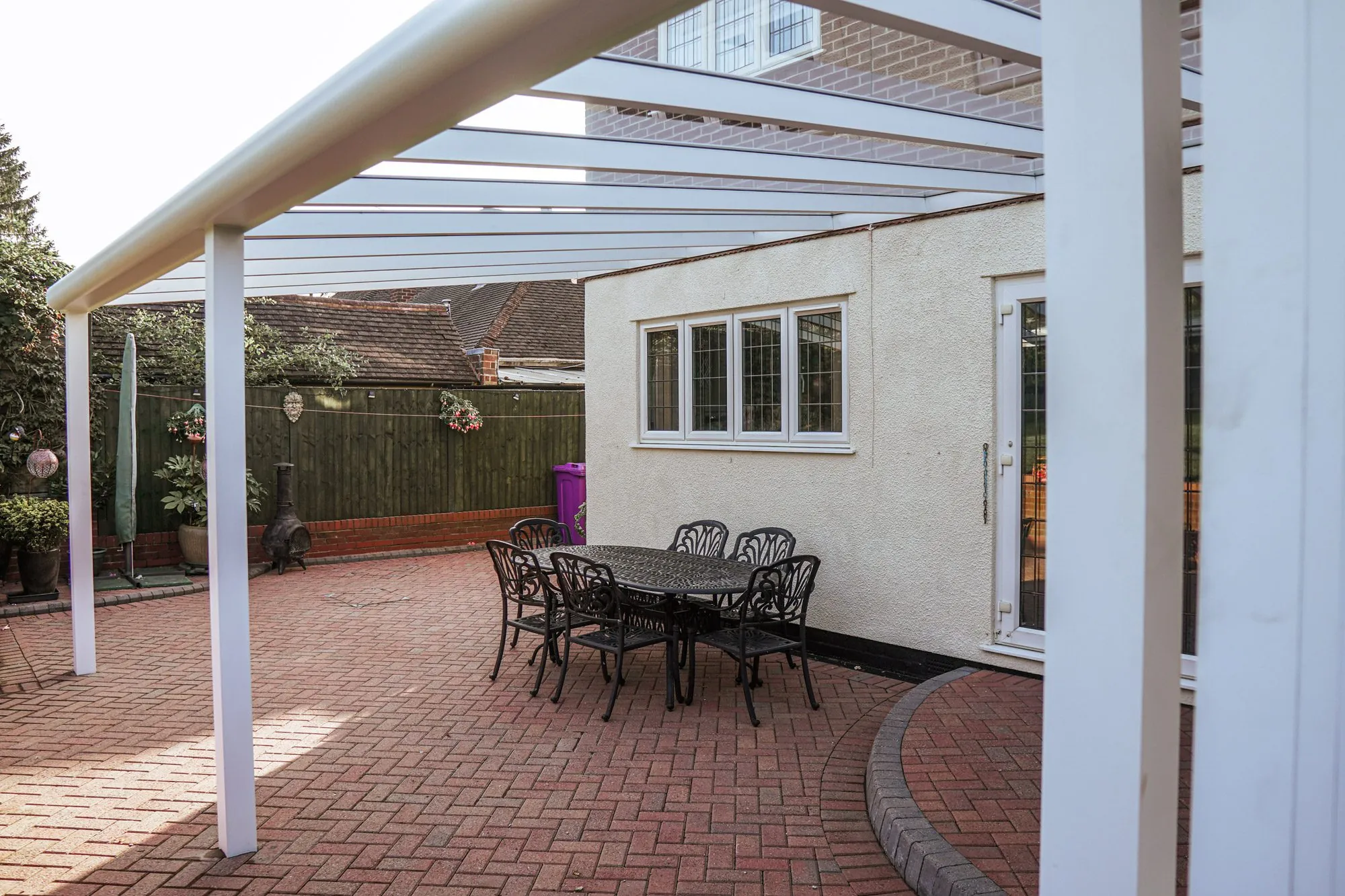
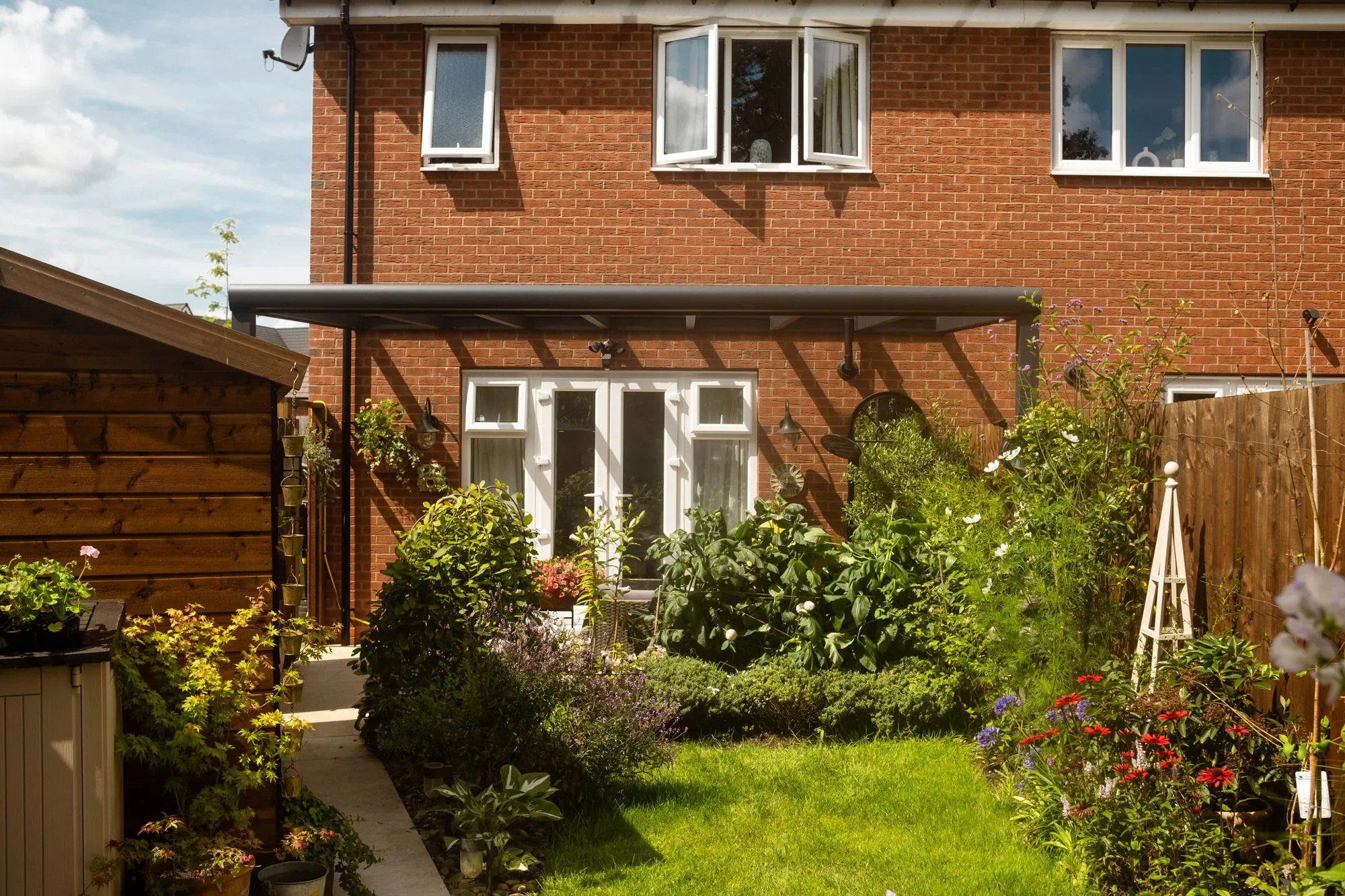
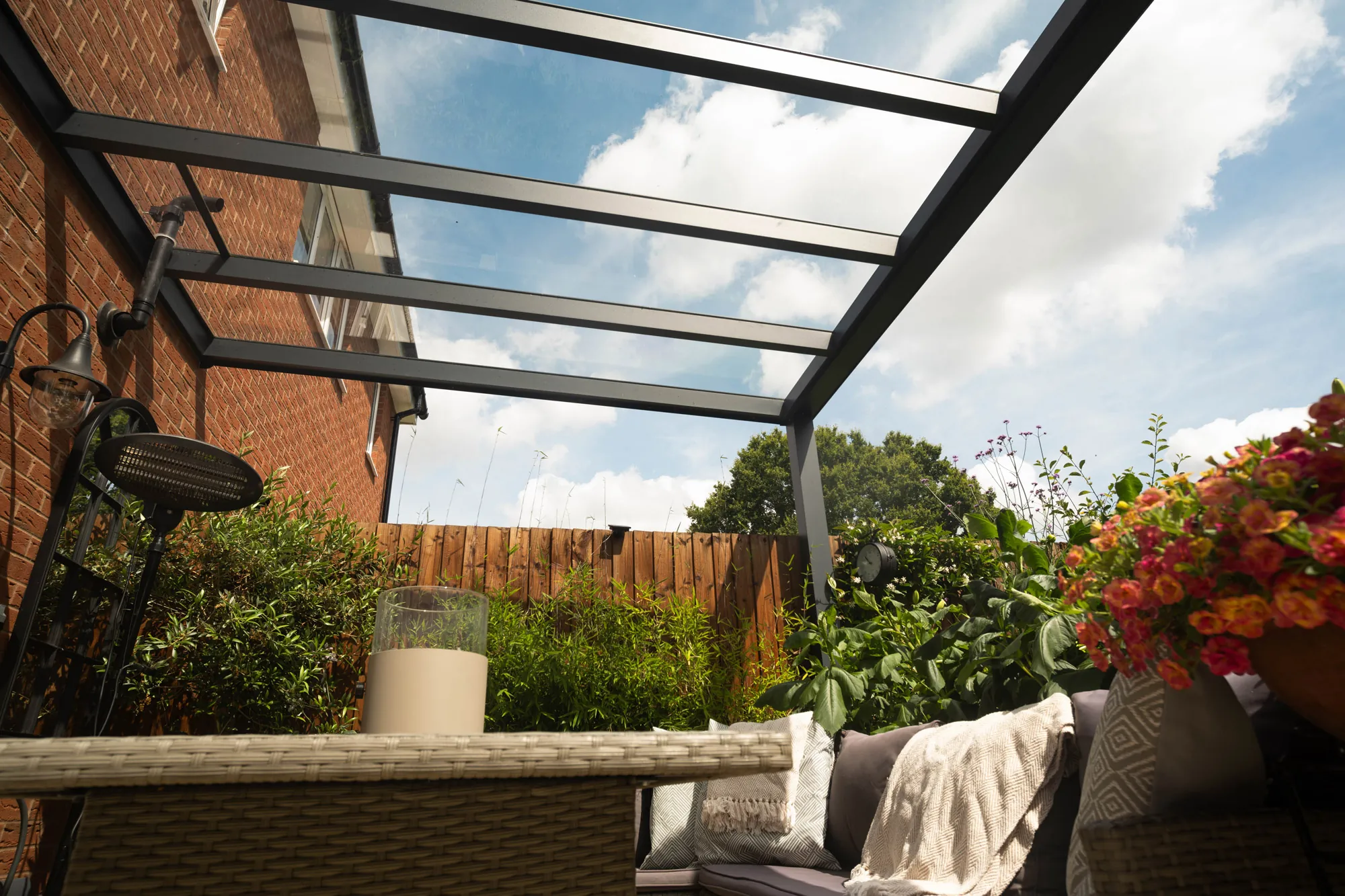
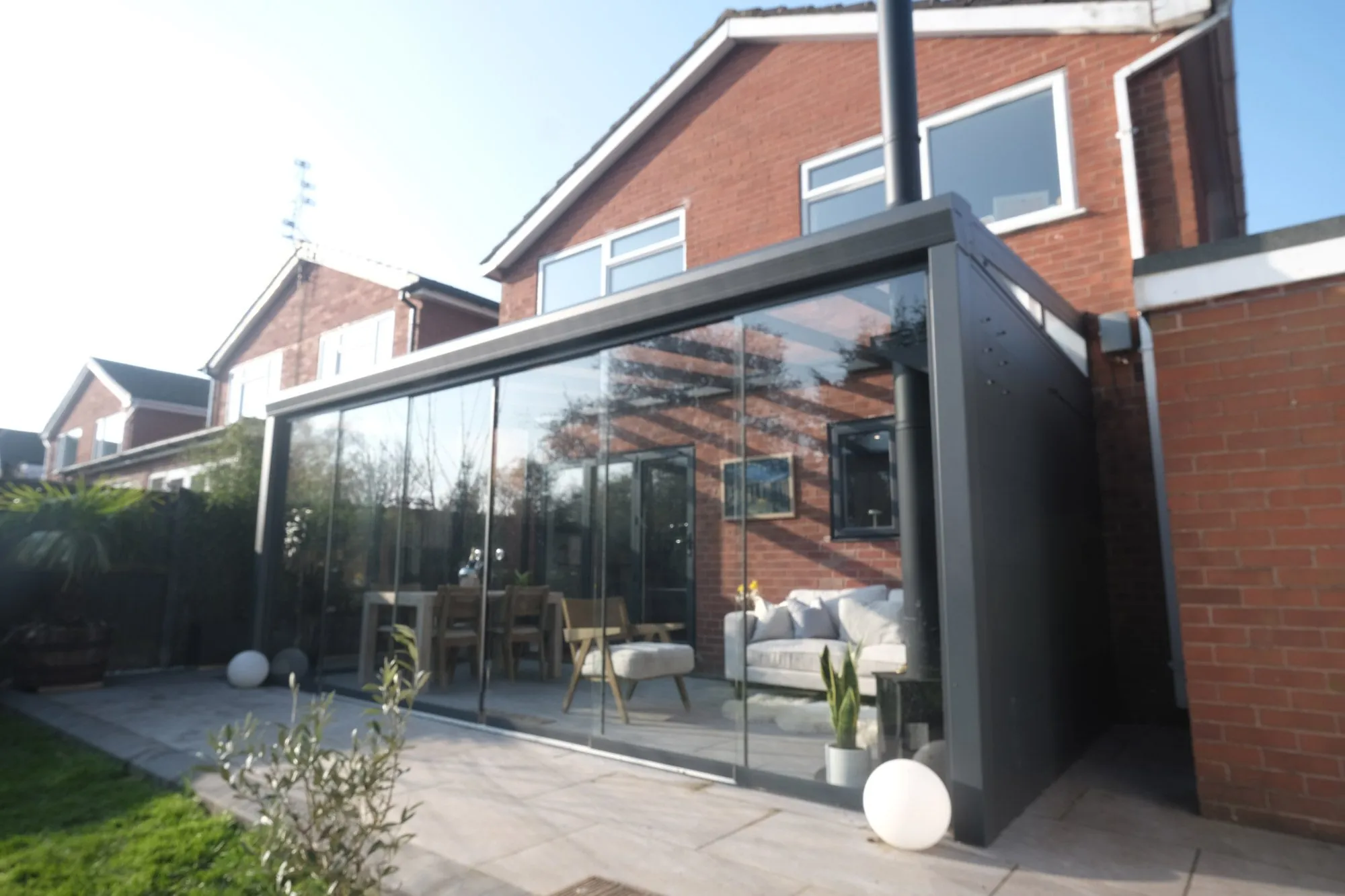
Got questions? Here are some of our most common!
Should I lay my patio before or after my veranda is installed?
We always recommend the patio is laid first. This allows us to specify the correct foundations beneath each post location, confirm drainage falls and channel positions, and ensure the finished veranda sits cleanly on a level, well-drained surface. Trying to install a patio around an existing veranda is harder, more disruptive, and often more expensive in the long run.
What foundations are needed under the veranda posts?
For a new patio, we recommend a minimum 350–500mm square concrete pad at each post location, laid before the patio surface. Once the patio is down, our team drills through the slab and into the concrete below, fixing an internal steel U-profile that the veranda post then sits in and is anchored to. Foundations for side walls and glass sliding doors are specified individually depending on the product.
Why does patio drainage matter so much under a veranda?
Poor drainage is one of the most common causes of long-term problems with outdoor structures. A patio that falls towards your home will channel rainwater back at your property — and if you have a glass room with sliding doors, water can find its way inside through the door tracks or grout lines. A patio that’s perfectly flat will pool. The right approach is a gentle fall away from the house, combined with an ACO drainage channel to direct surface water into your main drainage point.
Do you work with my landscaper or patio contractor?
Yes — and we think this is one of the most valuable parts of choosing Fleming Verandas. We work directly with your chosen landscaper or contractor, providing exact measurements, foundation specifications, fall directions, and drainage detail before any work begins. It takes the project management stress off you and ensures everyone is aligned long before our installation team arrives on site.
Can you install a veranda on an existing patio?
In many cases, yes. We’ll assess your existing patio at the site survey to confirm the slab type, fall, drainage, and underlying bedding. If the patio is in good structural condition with suitable foundations, we can often fix straight through into them. Where the foundations aren’t suitable, we can excavate a small area (approximately 250–550mm square) at each post location and concrete the posts directly into the ground, reinstating the surrounding patio surface around them.
What happens during a Fleming Verandas site survey?
A site survey is where the practical detail gets nailed down. Our surveyor will assess your existing patio (or planned patio area), confirm post locations, identify any drainage considerations, take exact measurements, and discuss the foundation approach in full. By the end of the visit, you’ll have a clear understanding of what’s needed, what we’ll do, and exactly how the project will unfold — with no surprises later on.
What's the Fleming Verandas approach to patio and veranda planning?
Simple — do it right, pay once. We plan every project from the ground up (literally), work directly with your landscaper or contractor, and make sure every detail from foundations to drainage to the finished installation is considered up front. It’s the approach we’ve built our reputation on, and it’s the reason so many of our customers come back to us for future modular additions like side walls, glass doors, and louvred roofs.